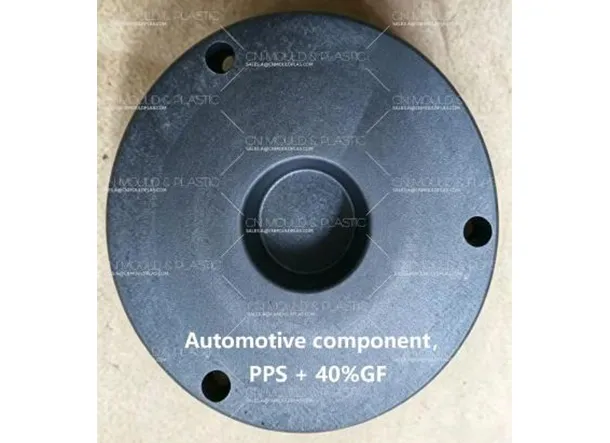
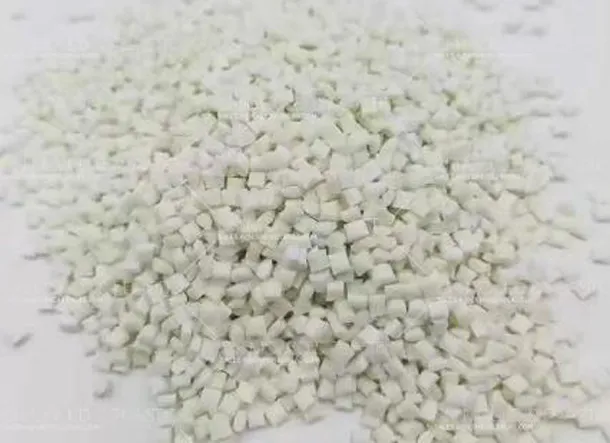
Polyphenylene sulfide (PPS) is a high‑performance engineering plastic known for its exceptional thermal stability, chemical resistance, and inherent flame retardancy. It is a precision molding materi...
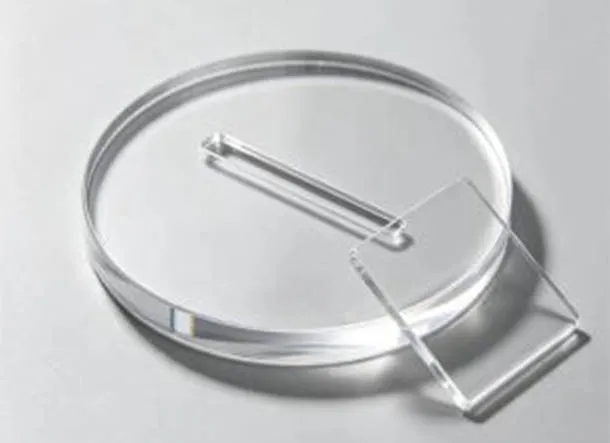
Polymethyl methacrylate (PMMA), commonly known as acrylic or Plexiglas, is best known for its excellent optical clarity. It is one of the most widely used transparent plastics in injection molding. Mo...
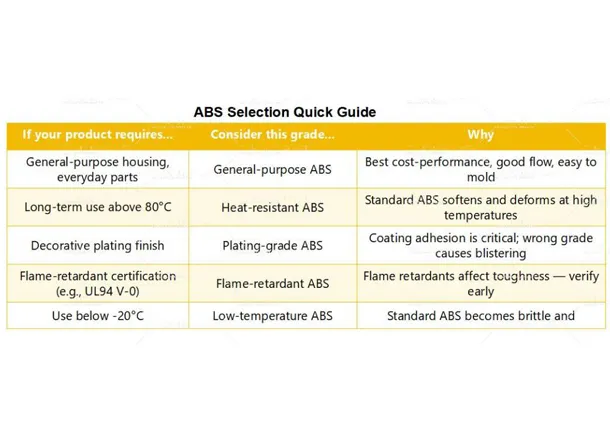
ABS is a terpolymer of acrylonitrile, butadiene, and styrene. Each component contributes different properties, and the ratio between them determines the material's final performance. Additives als...
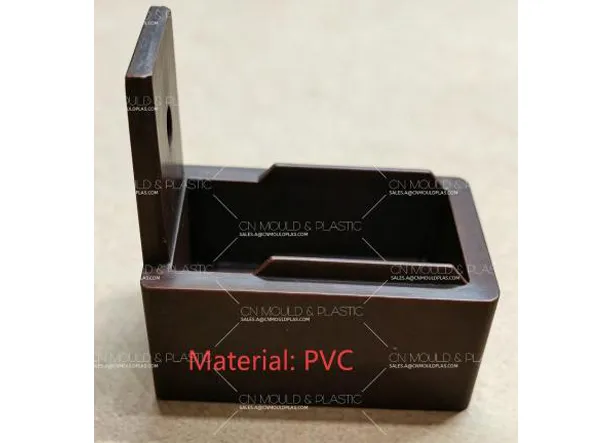
Thermal Behavior of PVCPVC behaves as a solid at temperatures below its glass transition temperature (Tg), which is approximately 80–85°C. Above this temperature, it begins to soften. When the tempe...
Polyethylene terephthalate (PET) is widely used in injection molding, but its processing and mechanical properties can be significantly improved through blending with other polymers. PET blends are co...
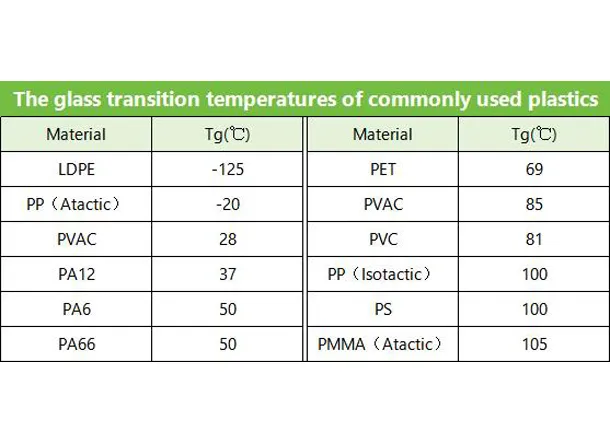
When selecting a plastic material for a specific application, glass transition temperature (Tg) is one of the most important properties to consider.The transition from a glassy state to a rubbery stat...
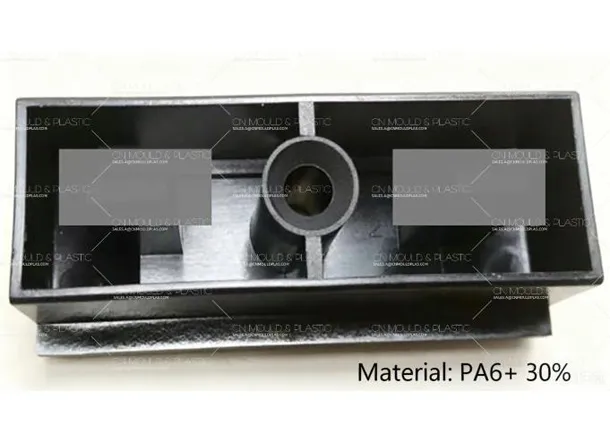
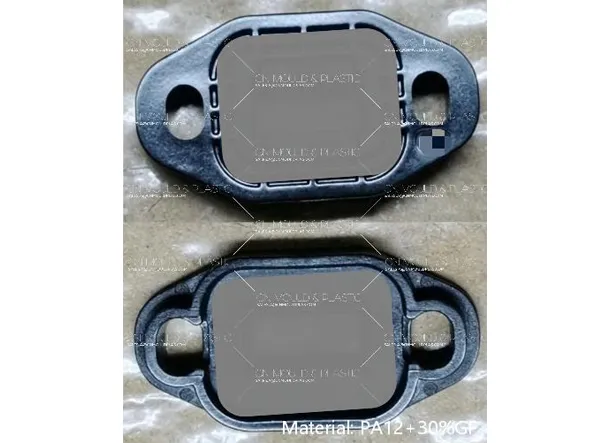
To improve the impact strength, heat resistance, dimensional stability, and creep resistance of polyamide (PA), glass fiber reinforcement is commonly used. However, processing glass‑filled PA require...
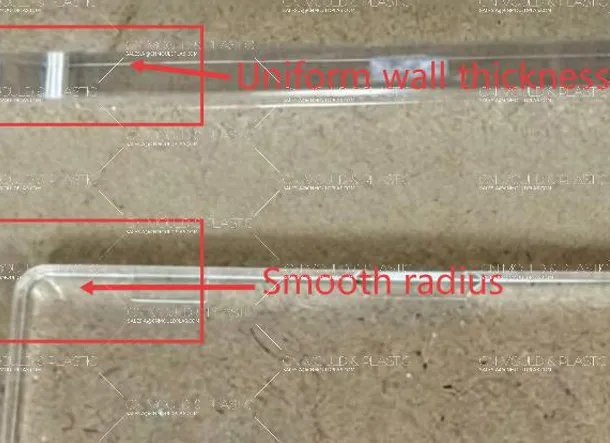
PMMA (Polymethyl Methacrylate) is widely used for transparent plastic parts due to its excellent optical clarity. However, molding defect‑free transparent parts requires strict control over materials...
Polyamide (PA) plastics — commonly known as nylon — are widely used in injection molding. Proper process control is essential to achieve high‑quality parts. Key parameters include barrel temperatur...
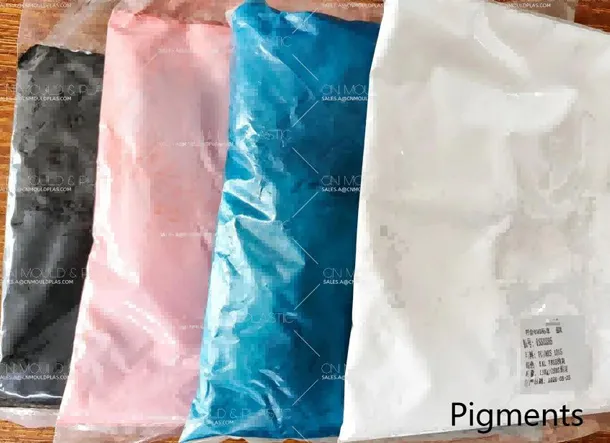
Coloring refers to adding colorants to plastic materials. Mixing is the process of evenly distributing them.Direct Coloring with PigmentsDirectly mixing pigments with plastic is a traditional method w...
 English
  français
  Deutsch
  Español
  italiano
  русский
  português
  العربية
  dansk
dansk  Suomi
Suomi  Svenska
  norsk
norsk