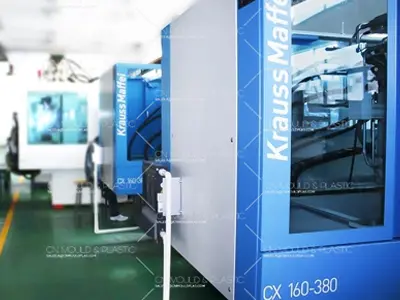
Polyethylene terephthalate (PET) is widely used in injection molding, but its processing and mechanical properties can be significantly improved through blending with other polymers. PET blends are commonly used in electronic, automotive, and industrial applications — including valves, exhaust parts, small motors, transformers, capacitor housings, gears, pump bodies, pulleys, and timing components.
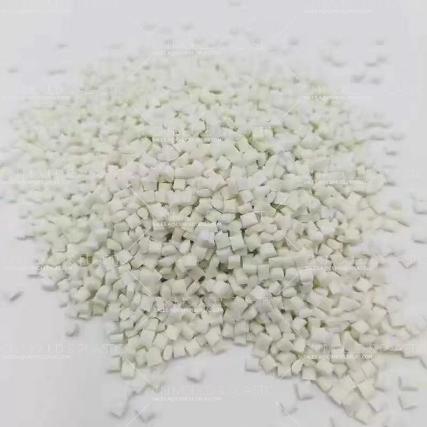
Common polymers used for PET modification include PE, PP, PS, PA, PC, and PBT.
PET/PE Blends
Blending PET with PE improves impact strength. However, the two polymers have poor compatibility, so a compatibilizer must be added to achieve effective modification.
Common compatibilizers for PET/PE blends:
The blending ratio, compatibilizer type, and dosage all affect the final properties of the blend.
PET/PP Blends
PET and PP also require a compatibilizer. Commonly used compatibilizers include:
PET/PP blends generally show improved impact strength, but flexural strength and flexural modulus tend to decrease. For example, a PET/PP (80:20) blend with 5% SEBS‑g‑MAH achieves:
Flexural strength: 45 MPa
Flexural modulus: 1380 MPa
Notched impact strength: 8.4 kJ/m²
PET/PS Blends
PET/PS blends offer improved tensile strength and elastic modulus, but impact resistance is reduced.
Common compatibilizer: Styrene‑glycidyl methacrylate graft copolymer (S-g‑GMA), typically used at 5–10% .
PET/PC Blends
PET and PC blends complement each other well, significantly improving the impact resistance of PET and producing high‑impact grades.
Adding a sodium salt of ethylene‑methacrylic acid can accelerate crystallization during molding, which shortens the molding cycle.

 English
  français
  Deutsch
  Español
  italiano
  русский
  português
  العربية
  dansk
dansk  Suomi
Suomi  Svenska
  norsk
norsk