English
  français
  Deutsch
  Español
  italiano
  русский
  português
  العربية
  dansk
dansk  Suomi
Suomi  Svenska
  norsk
norsk 08-28
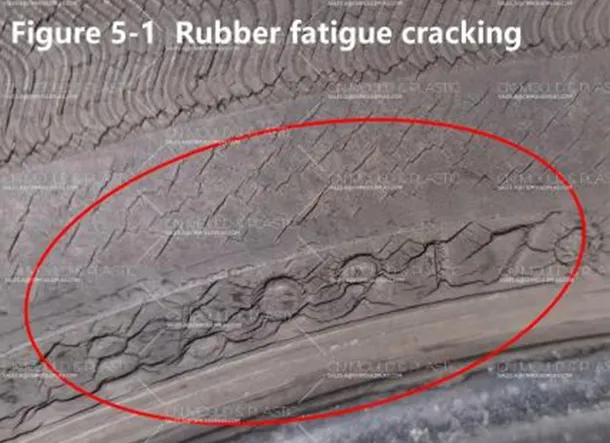
Rubber fatigue aging refers to the damage or irreversible changes in structure and properties that occur when rubber products are subjected to cyclic stress and deformation. This phenomenon is common ...

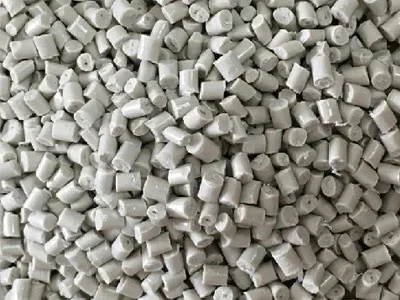
ABS plastic is composed of acrylonitrile (A), butadiene (B) and styrene (S). ABS plastic has the common properties of three components, A makes it resistant to chemical corrosion and high temperature, B makes it have high elasticity and toughness, S makes it have the characteristics of thermoplastics and improve electrical properties. Therefore, ABS plastic is a kind of hard material with easy access to raw materials, good comprehensive performance, and cheap price. ABS plastics have been widely used in machinery, electrical, textile, automobile, aircraft, ships and other manufacturing and chemical industries.
| ABS | CYCOLAC™ RESIN MG47F | POLYLAC® PA-777D | Lustran® ABS 433 | ABS AF312A | Unit | Testing Standard |
| Data sheet | ||||||
| Manufacturer | SABIC | CHIMEI | INEOS | LG | ||
| Description | Multi-purpose, injection molding ABS providing a favorable balance of engineering properties. FDA compliant. | Super high heat | Lustran® 433 is a general-purpose injection molding grade of ABS (Acrylonitrile Butadiene Styrene). It is a high impact, high-gloss ABS, available only in natural (NR)and black (BK904000). | Flame Retardant | ||
| Appearance | Natural color | Natural color | Natural color/Black | Natural color | ||
| UL Yellow Card | / | / | E44741-235636 | / | ||
| Physical | Dry | Dry | Dry | Dry | Unit | Test Method |
| Density | 1.04 | 1.06 | / | 1.19(ASTM D792) | g/cm³ | ISO 1183 |
| Mechanical | Dry | Dry | Dry | Dry | Unit | Test Method |
| Tensile Modulus | 2370 | / | 2550(ASTM D638) | 23000 (kg/cm2,ASTM D638) | MPa | ISO 527-2 |
| Tensile Stress(Break) | 35 | 33 | 42.1(ASTM D638) | / | MPa | ISO 527-2 |
| Tensile Strain(Yield) | 2.5 | 34 | 30 (ASTM D638) | 5 (ASTM D638) | % | ISO 527-2 |
| Impact | Dry | Dry | Dry | Dry | Unit | Test Method |
| Charpy Notched Impact Strength(23°C) | 26 | 14 | / | / | kJ/m² | ISO 179/1eA |
| Charpy Unnotched Impact Strength(23°C) | / | / | / | / | kJ/m² | ISO 179/1eU |
| Notched lzod Impact Strength(23°C) | 22 | 13 | 370(J/m²,ASTM D256) | 24(kg·cm/cm ,ASTM D256) | kJ/m² | ISO 180/1A |
| Thermal | Dry | Dry | Dry | Dry | Unit | Test Method |
| Heat Deflection Temperature at 1.8 Mpa | 81 | 97 | 85(ASTM D648) | 76(ASTM D648) | °C | ISO 75-1/-2 |
| Vicat Softening Temp, Rate B/50 | 98 | 117 | / | 83(ASTM D1525) | °C | ISO 306 |
| Melting Temperature | 220~260 | / | / | 200 ~ 230 | °C | ISO 11357-3 |
| Electrical | Dry | Dry | Dry | Dry | Unit | Test Method |
| Comparative Tracking Index | 0 | / | / | / | PLC Code | UL 746A |
| Flammability | Dry | Dry | Dry | Dry | Unit | Test Method |
| Flame Class Rating | HB | HB | HB | V-0 | class | UL94 |