What is a Boss?
Simply put, a boss is a raised, cylindrical feature on a plastic part. Its main jobs are:
But designing a good boss isn't just about sticking a cylinder on your part. Get it wrong, and you'll have sinking, cracking, or molding issues. Get it right, and your assembly will be strong and reliable.
The 7 Golden Rules of Boss Design
Here are the key principles you MUST follow for a successful design:
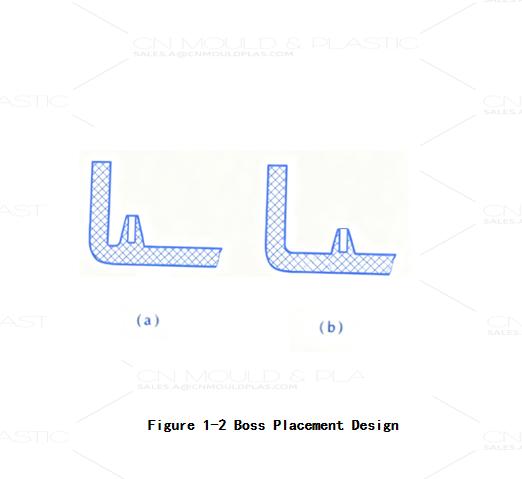
1. Location is Key: Always place bosses in the corners of the part whenever possible. This provides natural support.
2. Mind the Angle: Include sufficient draft angle for easy demolding. No one wants a part stuck in the mold!
3. Reinforce with Ribs: Support the boss's side with reinforcing ribs. This distributes the load and stress from the fastener, preventing failure.
4. Blend it In: Use a generous fillet radius where the boss meets the main wall. A sharp corner is a stress concentrator just waiting to crack.
5. Size Matters: The boss's outer diameter should be at least twice the diameter of the inner screw hole.
6. Watch the Height: As a rule of thumb, the boss height shouldn't exceed twice its outer diameter. Tall, skinny bosses are weak and hard to fill.
7. Control the Wall: The boss wall thickness should not exceed 3/4 of the main wall thickness, with 1/2 being ideal. This prevents ugly sink marks on the opposite surface.
Dos and Don'ts: Real-World Examples
Let's look at some practical applications and common mistakes.
Good Placement:
Bad Placement:
Reinforcement is Everything:
If a boss is on an open plane, you MUST connect it to the nearest wall with ribs. This provides strength and helps material flow during injection.
For fastener bosses, ensure the supporting shoulder is large enough. Avoid sharp transitions; use a smooth, gradual change in geometry for better strength and flow.
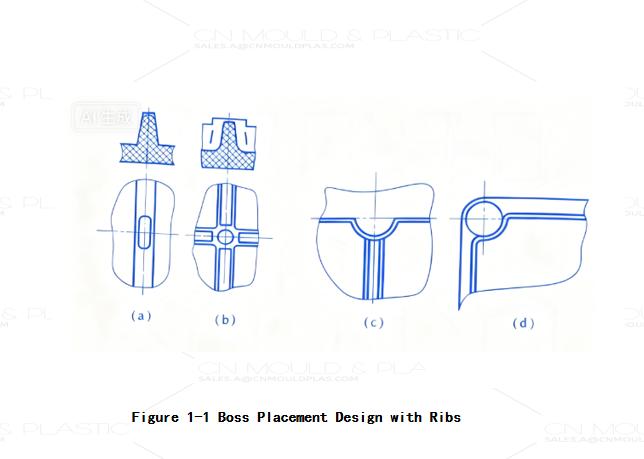
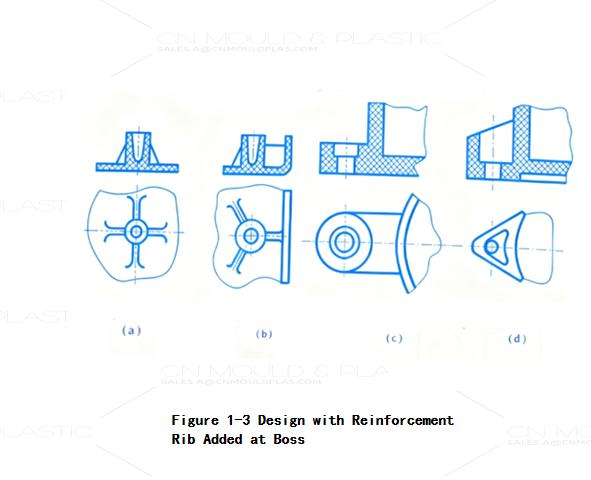
Keep it Simple:
ALWAYS design bosses with a circular cross-section. Non-circular shapes are a nightmare for mold making and can cause parts to stick during ejection

 English
  français
  Deutsch
  Español
  italiano
  русский
  português
  العربية
  dansk
dansk  Suomi
Suomi  Svenska
  norsk
norsk