In the design of plastic or lightweight structural parts, ensuring stability and strength without unnecessarily increasing weight or wall thickness is a common challenge. This is where features like gussets and ribs become essential. They provide significant structural support and rigidity to pillars and sidewalls, without the need to thicken the entire part wall.
For components that are inherently thin-walled and may bear loads or experience stress, adding gussets or ribs is particularly beneficial. They help prevent deflection, improve durability, and maintain the part’s shape under pressure—all while keeping material usage and manufacturing costs in check.
However, to avoid introducing new issues, a few design rules should be followed:
1. Thickness control – The thickness of a rib or gusset should generally not exceed 60% of the nominal wall thickness.
2. Avoid thick sections at intersections – Where ribs or gussets meet a wall, overly thick material can lead to sinks, voids, or extended cooling times. To prevent this, these features should be thinner than the primary wall.
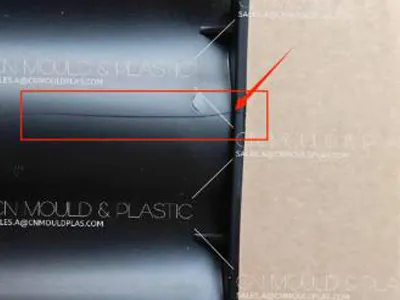
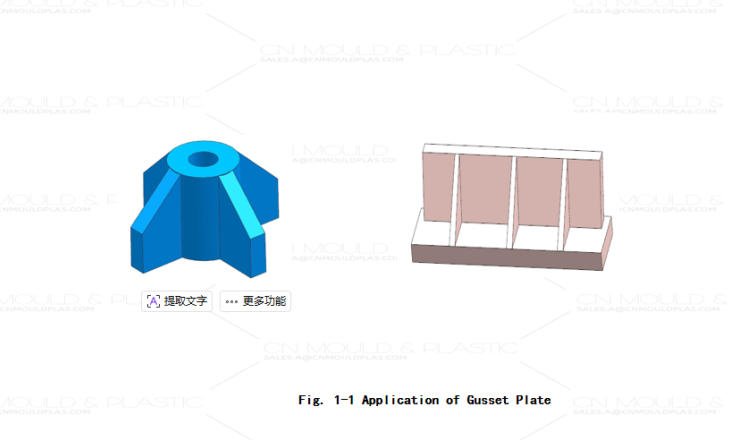
As shown in picture 1-1, gussets applied to standalone pillars or sidewalls offer clear structural support and enhance overall stability without thickening the main walls.
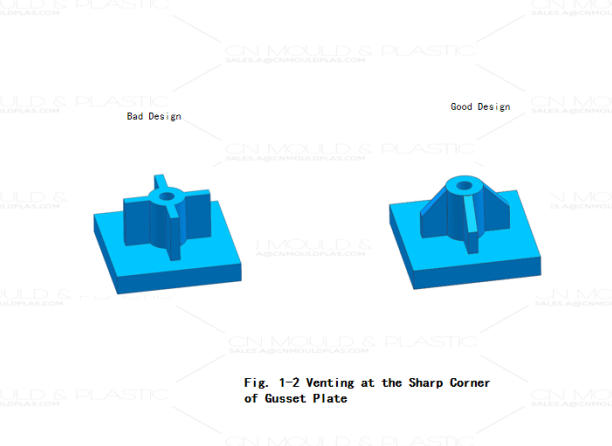
Another critical consideration lies in mold design. Gussets placed in certain areas can obstruct direct venting paths in the mold. If not addressed, trapped air in these zones may cause incomplete filling, short shots, or poor packing.
Therefore, it’s important to:
By thoughtfully integrating ribs and gussets—respecting thickness guidelines and venting requirements—you can achieve stronger, more reliable parts that are both lightweight and manufacturable.

 English
  français
  Deutsch
  Español
  italiano
  русский
  português
  العربية
  dansk
dansk  Suomi
Suomi  Svenska
  norsk
norsk