PMMA (Polymethyl Methacrylate) is widely used for transparent plastic parts due to its excellent optical clarity. However, molding defect‑free transparent parts requires strict control over materials, equipment, molds, and even part design. Defects such as streaks, bubbles, hazing, discoloration, black spots, or poor gloss must be avoided. Below are the key points to consider during PMMA injection molding.
1. Material Handling and Drying
Any contamination can affect transparency. Therefore, keep the material sealed during storage, transport, and feeding. Moisture is particularly harmful because it causes hydrolysis at high temperatures. Thorough drying is essential, and the injection machine must be equipped with a dehumidifying dryer. The air used for drying should be filtered and dehumidified.
2. Machine Cleaning and Purge
To prevent contamination from residual material or degraded resin (especially those with poor thermal stability), clean all machine components before starting and after stopping. Use a screw purge compound or purge with PE or PS. If temporary shutdown is necessary during production, lower the dryer temperature and barrel temperature to below 160°C to prevent thermal degradation.
3. Screw and Nozzle Selection
Both screw‑type and plunger‑type machines can be used. For screw machines, choose a screw with deep channels and a large nozzle orifice. If high part strength is required, select a screw with a larger length‑to‑diameter (L/D) ratio to allow lower‑temperature plasticization.
4. Mold Design Guidelines
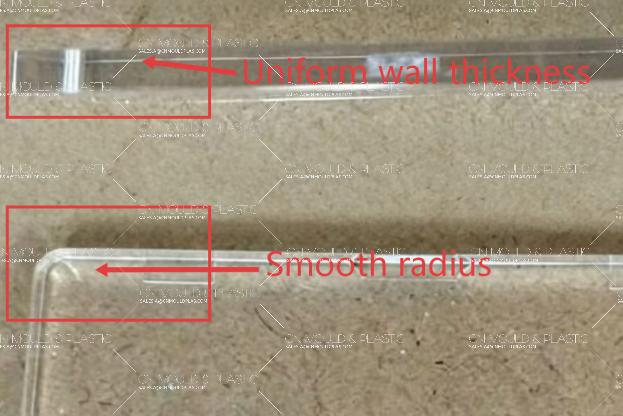
Wall thickness – Keep as uniform as possible, with smooth, gradual transitions. Avoid sharp corners.
Surface finish – The mold cavity must be highly polished, with a surface roughness ideally below Ra 0.8 μm.
Sprue – Use an internal taper; the optimal taper is 5°–7°. For wall thickness ≥4 mm, use a 7° taper with a sprue diameter of 8–10 mm. The overall sprue length should not exceed 50 mm.
Runner and gate – Keep runners as short, wide, and large as possible. Position gates according to shrinkage and solidification behavior. Add a cold slug well if necessary. For wall thickness <4 mm, runner diameter should be 6–8 mm; for thickness >4 mm, use 8–12 mm.
Draft angle – Generally 0.5° to 1°.
Venting – Provide vent holes or venting slots to release air and gases from the melt.
5. Injection Molding Process Settings
To minimize internal stress in the molded part, use multi‑stage injection – for example, slow → fast → slow. For thick‑wall parts, use slow injection throughout.
6. Use of Mold Release Agent and Regrind
To prevent surface quality degradation, minimize the use of mold release agents during molding. If regrind (recycled material) is used, it should not exceed 20% of the total material.

 English
  français
  Deutsch
  Español
  italiano
  русский
  português
  العربية
  dansk
dansk  Suomi
Suomi  Svenska
  norsk
norsk