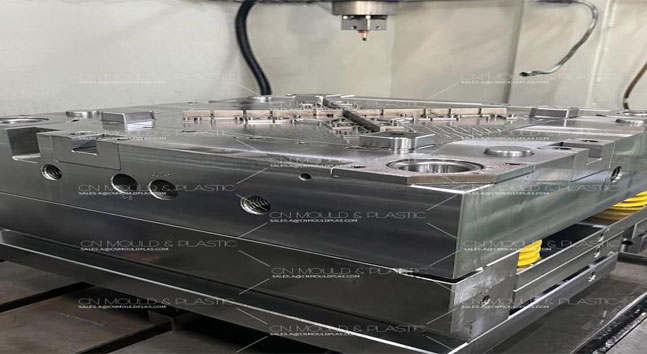
To improve the impact strength, heat resistance, dimensional stability, and creep resistance of polyamide (PA), glass fiber reinforcement is commonly used. However, processing glass‑filled PA requires special attention. Below are the key points to consider during injection molding.
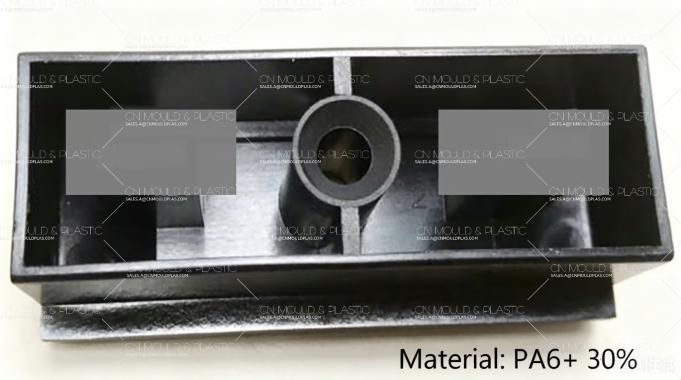
1. Fiber Content, Dimensions, and Additives
For injection molding, a glass fiber content of around 30% is generally suitable. The optimal fiber length is 2–3 mm with a diameter of 10–20 μm. At this level, melt flow is good, fibers disperse easily, and reinforcement is effective.
When selecting glass fibers, choose types specifically designed for nylon reinforcement. A coupling agent or compatibilizer should also be added. There are many compatibilizers available for nylon; graft‑type compatibilizers are commonly used at a level of about 3%. Additionally, adding approximately 0.8% of a polysiloxane‑based additive can significantly improve the surface quality of the molded part.
2. Screw Selection and Speed Control
A screw‑type injection molding machine is recommended because it provides better mixing and compounding of the glass fibers.
Too low screw speed → insufficient shear and mixing → poor plasticization and uneven fiber dispersion → reduced reinforcement.
Too high screw speed → high shear heating due to melt viscosity → risk of thermal degradation.
General rule: Lower glass content allows higher screw speed. For high glass content or flame‑retardant PA grades, use lower screw speeds.
3. Temperature, Pressure, and Speed Adjustments
Glass‑fiber‑reinforced PA has poorer melt flow than unreinforced PA. To improve flowability:
4. Preventing Fiber Separation (Floating Glass)
Because PA melt has low viscosity, glass fibers tend to separate from the melt during flow through the barrel, nozzle, and mold. This causes fiber exposure (floating glass) on the part surface.
Countermeasures:
5. Managing Anisotropy and Warpage
Glass fibers become oriented during injection molding, creating anisotropic properties that can lead to warpage. This must be considered in both part and mold design.
Whenever possible, design the part so that the fiber orientation aligns with the direction of the primary load (the stress direction). This reduces warpage risk and ensures better mechanical performance.

 English
  français
  Deutsch
  Español
  italiano
  русский
  português
  العربية
  dansk
dansk  Suomi
Suomi  Svenska
  norsk
norsk