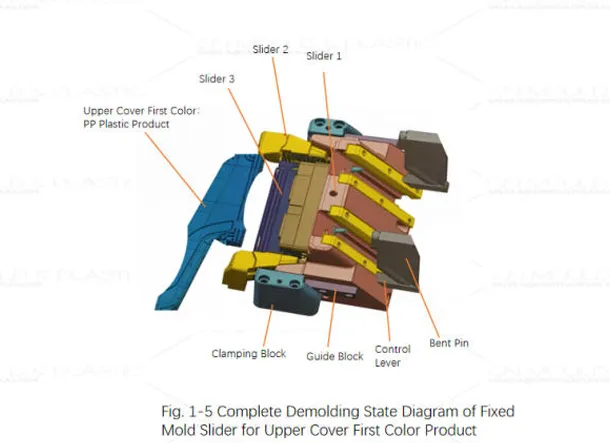
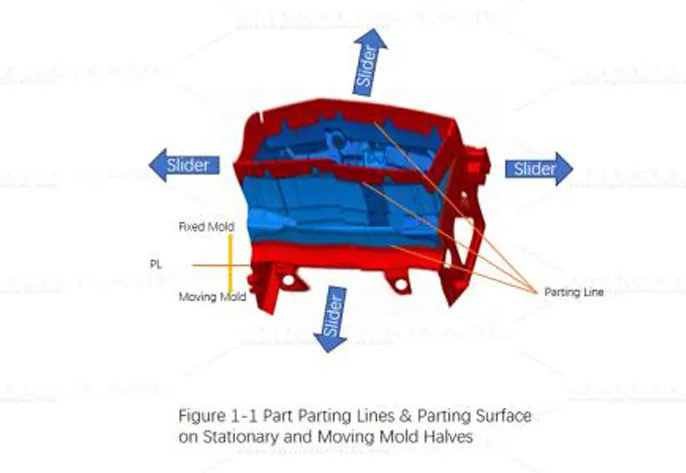
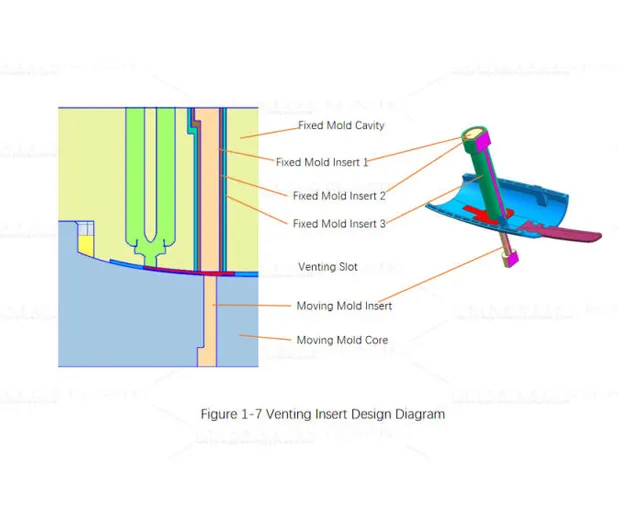
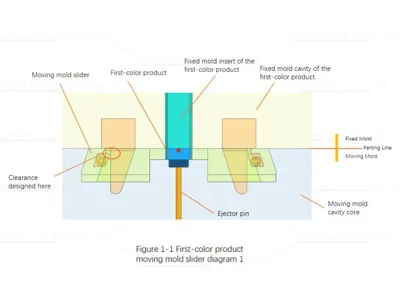
In the world of injection molding, complex part geometries often require equally complex mold designs. One such example is the first-color top cover shown in Figure 1-1, which features an innovative s...
Designing a mold for a complex overmolded part is always a challenge, but some projects truly push the boundaries. This blog walks through the critical thinking and solutions for a particularly intric...
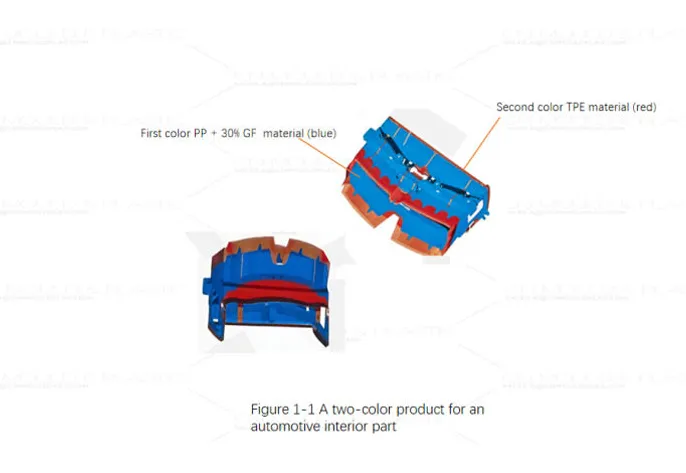
Figure 1-1 presents a two-color drawing of an automotive interior component, where the green section is the first-shot PP+30% GF material (hard plastic) and the orange section is the second-shot TPE m...
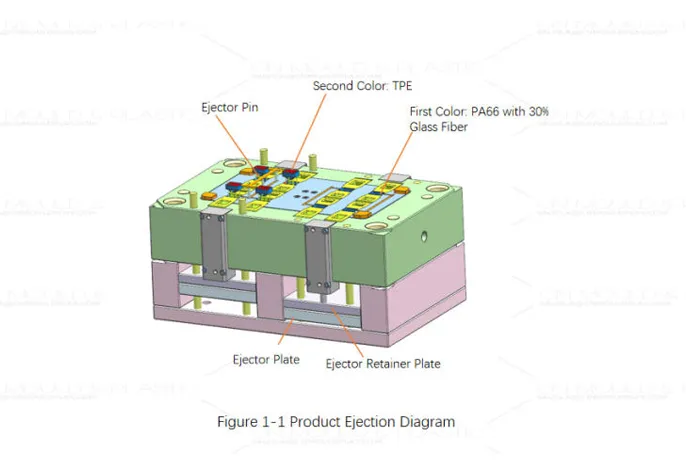
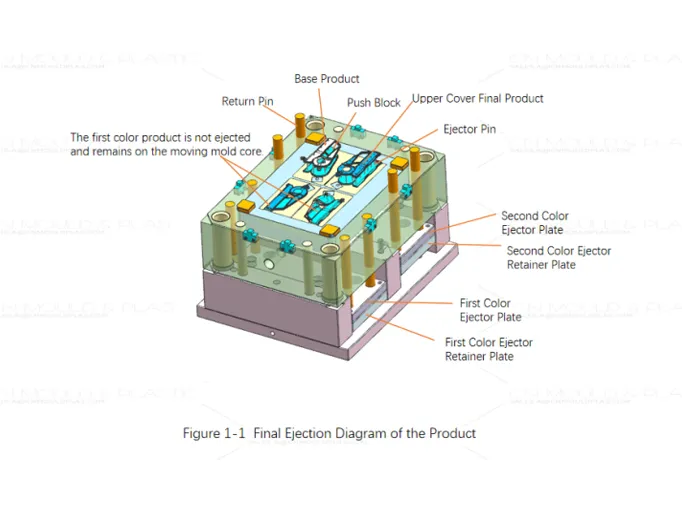
Product EjectionThe ejection of this two-color product is relatively straightforward. The ejector rod of the injection molding machine pushes the ejector plate and the ejector retainer plate, which in...
Product EjectionThis mold is a typical two-color mold with a rotating moving half. After the first color product is injection molded, the mold opens for the first time. The moving half then rotates 18...
Product EjectionThe ejection structure of this mold, although not overly complex, consists of three parts: the first-color cavity plate ejection, the second-color cavity plate ejection, and the moving...
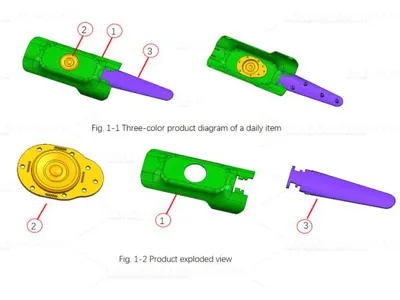
1.1 Product DescriptionFigures 1-1 and 1-2 show a three-color product diagram and an exploded view of a daily item, respectively. The color components are as follows:l First color green ①: ABS materi...
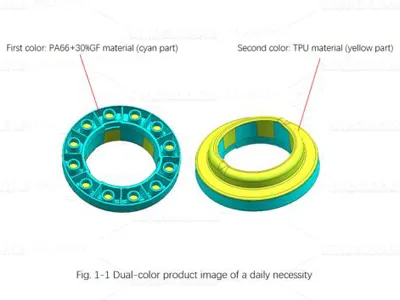
Product DescriptionFigure 1-1 shows a two-color product drawing of a daily item. The first color, green, is made of PA66 + 30% GF compound, and the second color, orange, is made of TPU compound (soft ...
In the world of injection molding, achieving high precision and durability in multi-material components requires meticulous attention to mold design, material selection, and process control. Today, we...
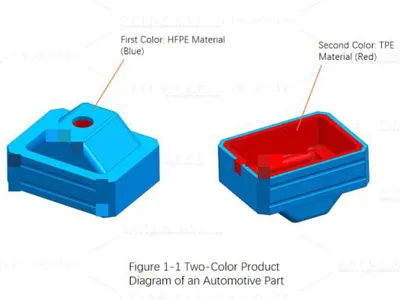
Product DescriptionFigure 1-1 shows a two-color product drawing of an automotive part. The outer green layer is made of HDPE compound (hard plastic), and the inner orange layer is made of TPE compound...
 English
  français
  Deutsch
  Español
  italiano
  русский
  português
  العربية
  dansk
dansk  Suomi
Suomi  Svenska
  norsk
norsk