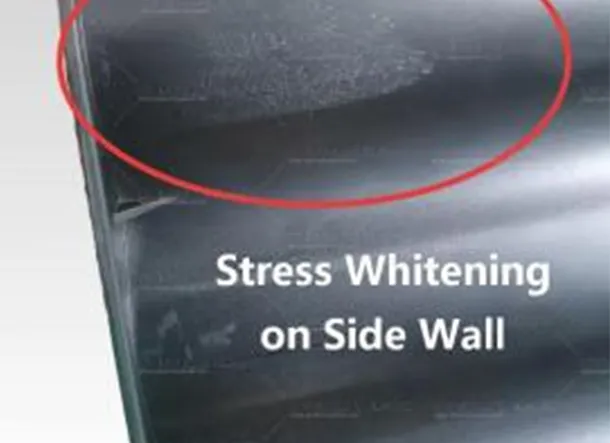
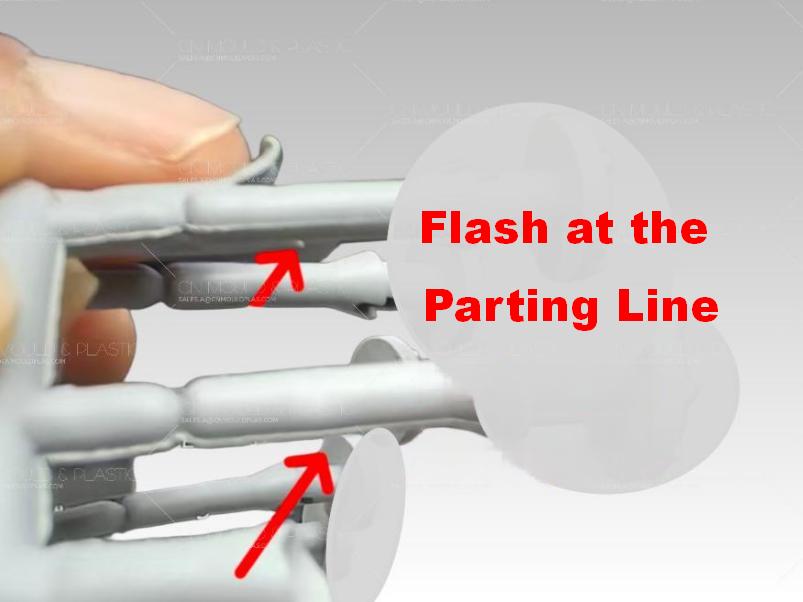
Flash at the parting line is one of the most common defects in injection molding. It appears as a thin layer of excess material protruding from the mold split line, as shown in the Figure, and it can cause secondary finishing costs, part assembly issues, and even mold damage if left unchecked.
What Causes Flash at the Parting Line?
Flash at the parting line can be traced to two main sources: process conditions and mold condition.
Process‑related causes – The most frequent cause is overfilling. When too much material is injected, the excess has nowhere to go but out through the parting line. This is often driven by excessive injection pressure, excessive shot size, or insufficient clamping force to keep the mold closed.
Mold‑related causes – Wear, damage, or deformation on the parting line surfaces can create small gaps. Even a tiny gap allows molten plastic to escape and form flash. Common mold issues include worn shut‑off surfaces, damaged parting line edges, or misalignment caused by loose guide pins or bushings.
How to Fix It
Start with the process. Before modifying the mold, try reducing the shot size or injection pressure to see if the flash disappears. If the part still fills properly without flash, the issue is likely overfill. You can then fine‑tune the holding pressure and time to maintain part quality without overpacking.
Increase clamping force. If the process adjustment doesn't work, the mold may not be clamped tightly enough. Increase the clamping force gradually. Be careful not to go too high—excessive clamping can deform the mold or machine platen.
Repair the mold. If the flash appears consistently in one area of the parting line, the mold itself may be worn or damaged. In this case, the affected area needs to be repaired. The typical fix is to weld the damaged section, grind it back to the correct profile, and polish it to the required surface finish. This restores the parting line seal and eliminates the gap that causes flash.

 English
  français
  Deutsch
  Español
  italiano
  русский
  português
  العربية
  dansk
dansk  Suomi
Suomi  Svenska
  norsk
norsk