During injection molding production, operators may occasionally encounter a situation where the mold cannot be opened after clamping. This problem not only interrupts production but may also indicate underlying mechanical or hydraulic issues. Below are the common causes and their corresponding solutions.
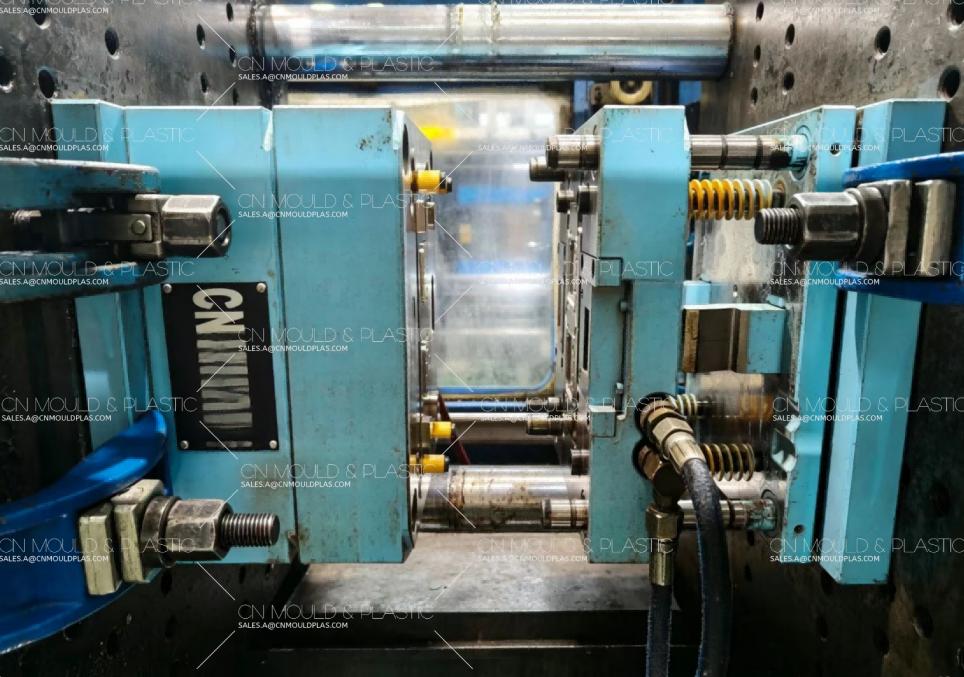
1. Common Causes of Failure to Open
① Improper opening parameters
The opening speed, pressure, or position settings may be too low. If the set values are insufficient, the machine cannot generate enough force to separate the mold.
② Long‑term high‑pressure clamping during shutdown
If the machine is left in a high‑pressure clamped state for an extended period (e.g., during holidays or maintenance), the toggle mechanism or platens may become stuck.
③ Mechanical wear on aging machines
Over time, the moving platen may sag due to wear on guide rails or support pads. Increased moving resistance can prevent opening. Worn connecting links or a bent crosshead guide rod can also cause jamming.
④ Stuck or mispositioned opening valve
The spool of the opening hydraulic valve may be stuck, preventing the valve from shifting to the correct position. This blocks oil flow and eliminates opening force.
⑤ Damaged cylinder seals
Internal leakage in the opening/clamping cylinder (due to worn seals) reduces effective oil pressure. The opening force becomes insufficient even if the pump delivers normal pressure.
⑥ Faulty electronic scale or limit switch
A malfunctioning electronic ruler (linear position sensor) or opening stop limit switch can send incorrect signals to the controller, preventing the opening action from starting.
2. Solutions
① Adjust opening parameters
Increase the opening speed and pressure gradually within safe limits. Also check the opening position setting.
② Inspect and lubricate the clamping mechanism
Check whether the toggle links, platens, or other moving parts are stuck. Remove any foreign material and apply proper lubrication. If links are severely worn beyond allowable limits, replace them. If the crosshead guide rod is bent, replace it as well.
③ Correct moving platen sag
On older machines with a sagging moving platen, adjust the support pads (wear plates) under the platen to raise it back to the proper height.
④ Check the opening hydraulic valve
If the valve spool is stuck or the valve body is damaged, clean or replace the valve.
⑤ Inspect cylinder seals
Test the opening/clamping cylinder for internal leakage. If seals are found to be worn or broken, replace them.
⑥ Check the electronic scale and limit switch
Verify the readings of the electronic linear position sensor. Clean or recalibrate as needed. If the opening stop limit switch is faulty, repair or replace it.

 English
  français
  Deutsch
  Español
  italiano
  русский
  português
  العربية
  dansk
dansk  Suomi
Suomi  Svenska
  norsk
norsk