A mold goes through design, machining, and assembly — consuming significant time and cost. If you skip the pre-trial checks, the consequences range from repeated mold modifications and delayed delivery to mold damage and production delays.
We've summarized the 8 most commonly overlooked checks before mold trial. Every one of them comes from real production experience.
Mold Appearance and Precision Check
Open the mold. Look at it first.
Are there any dents, scratches, or rust on the moving half, fixed half, cavity, or core? Are the parting surfaces and all contact surfaces evenly mated? Is the clearance reasonable?
Skipping this check is like driving with your eyes closed. A damaged cavity leaves marks on the part. An uneven parting surface means flash cannot be controlled.
Mold and Machine Parameter Match Check
The mold is made, but it doesn't fit the injection machine — or it fits but doesn't match. This happens more often than you'd think.
Before trial, confirm:
Does the nozzle seat radius (SR) match the injection machine nozzle tip radius?
Is the sprue small-end diameter larger than the sprue bushing nozzle diameter?
Do the mold's width, height, thickness, locating ring size, ejector hole size and spacing meet the machine's requirements?
If parameters don't match, the trial is a waste of time.
Mold Lifting Balance Check
When lifting the mold, is the center of gravity balanced?
The fixed half surface must not face downward. An upward tilt of up to 5° is allowed. Are the lifting ring screws fully tightened? Is the strength sufficient for the entire mold's lifting load?
An unbalanced lift can damage the mold — or injure personnel.
Cooling Water Circuit Check
Connect the cooling water circuit. Check for leaks or seepage. Is the inlet/outlet direction correct?
Cooling problems cause uneven cooling during trial, leading to dimensional and appearance defects. Worse, water leaks can rust the mold or cause electrical short circuits.
Dry Run and Precision Check
After mold installation, don't rush to inject. Do a few dry runs first. Check:
Any abnormal noise during mold opening and closing?
Is the ejection action smooth?
Any sticking in sliding components?
Does the ejector plate fully return when the mold closes?
If anything is abnormal, fix it before trial.
Electrical Components and Circuit Check
Before turning on the heater, check that the temperature controller and thermocouple types and specifications match.
After the heating elements are connected, they should heat up quickly, evenly, and under proper control — with no leakage or short circuits.
Skipping electrical checks can lead to temperature runaway, burned heater bands, or even safety incidents.
Hydraulic Cylinder Check
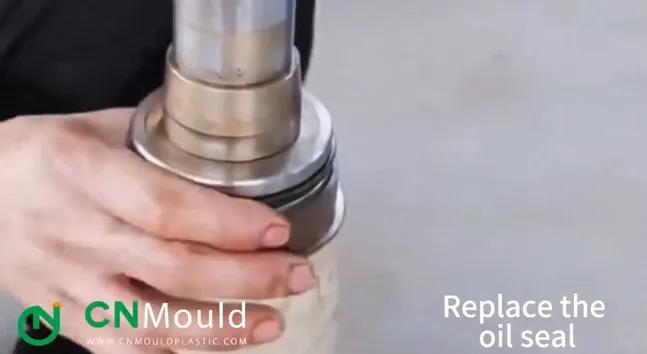
If the mold has hydraulic cylinders (such as hydraulic core pullers), check after connecting the oil circuit:
If the cylinder doesn't work properly, the core-pulling mechanism may jam or fail to position correctly — directly causing part defects or mold damage.
Pneumatic Circuit Check
If the mold has pneumatic circuits (such as air ejection or gas-assisted molding), check after connecting the air circuit:
Pneumatic problems cause unstable air actions, affecting cycle time and part consistency.
Summary
Pre-trial checks are not about following a procedure — they're about getting it right the first time.
Complete these 8 checks, and your trial success rate will improve significantly. Mold modifications will decrease. Delivery will be more reliable.
If you're looking for a mold partner who does these checks before trial, contact us.

 English
  français
  Deutsch
  Español
  italiano
  русский
  português
  العربية
  dansk
dansk  Suomi
Suomi  Svenska
  norsk
norsk