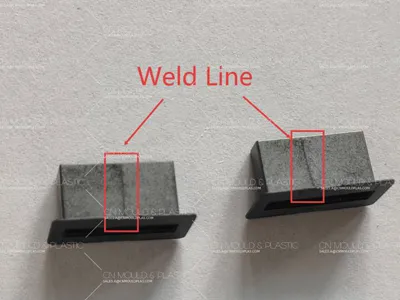
Weld lines form where two melt fronts meet inside the mold cavity. Long flow paths cause the melt to cool, and trapped air prevents proper fusion, resulting in weak, visible lines. This article outlin...
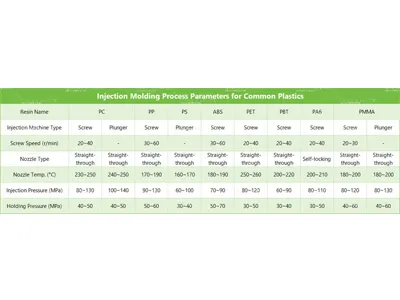
Injection pressure is the force that pushes molten plastic through the nozzle, runners, and cavity. It overcomes flow resistance and also compacts the melt to compensate for shrinkage. The pressure va...
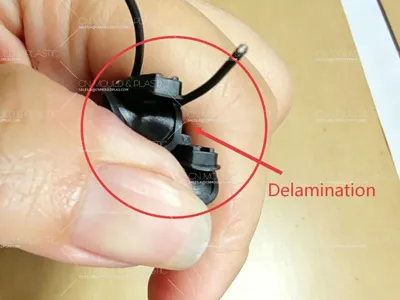
Surface peeling ( Delamination) is a common defect in injection molded parts, where thin layers separate from the surface. Understanding the root causes is essential for producing high‑quality parts....
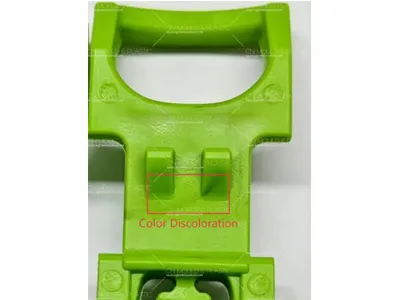
During injection molding, plastic parts may sometimes show unwanted color changes — such as yellowing, browning, or dark streaks. This defect is often referred to as discoloration. Understanding the ...
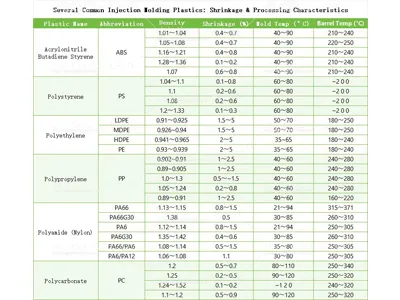
What Is Molding Shrinkage?Molding shrinkage is the ratio of dimensional change caused by cooling after injection molding to the original cavity size. In simple terms, it tells you how much a plastic p...
Dimensional accuracy is a critical quality for plastic parts, but it is influenced by many complex factors. Understanding these factors is essential for setting realistic tolerances and producing cons...
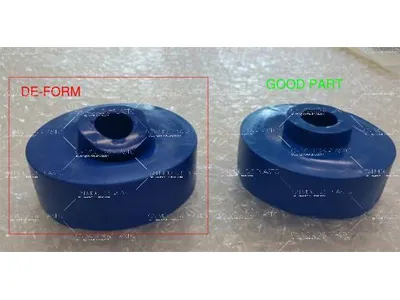
What Causes Deformation in Plastic Parts?Deformation in molded plastic parts — including warpage, cracking, bending, and twisting — is primarily caused by residual internal stresses. These stresses ...
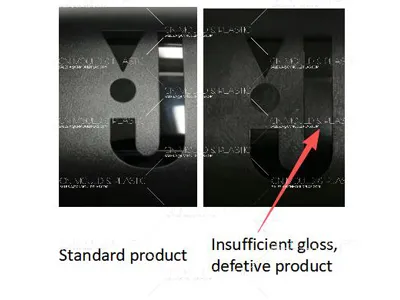
Poor surface gloss refers to a dull, matte, or unevenly shiny appearance on all or part of a plastic product, as illustrated in Figure. For transparent plastic parts, poor gloss often reduces light tr...
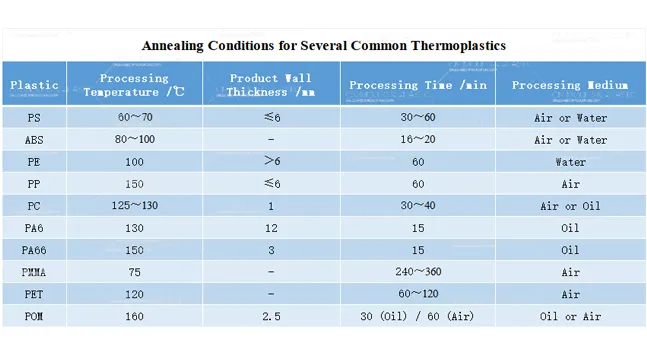
Why Anneal?The purpose of annealing is to eliminate localized stress concentrations that occur in plastic parts during cooling and solidification. These stresses arise when different sections of a par...
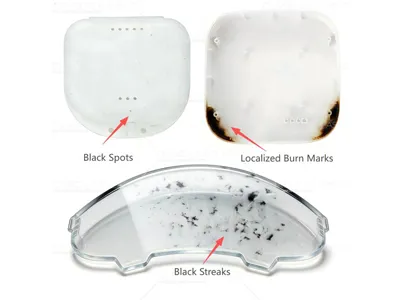
During injection molding, black spots defect are a common quality defect that directly affects product appearance and yield rate. These defects mainly include three types: black spots, localized burn ...
 English
  français
  Deutsch
  Español
  italiano
  русский
  português
  العربية
  dansk
dansk  Suomi
Suomi  Svenska
  norsk
norsk