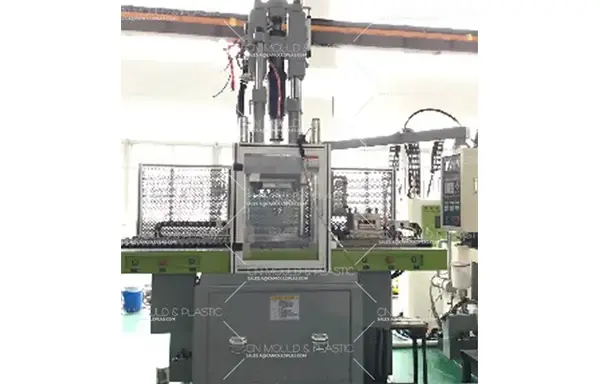
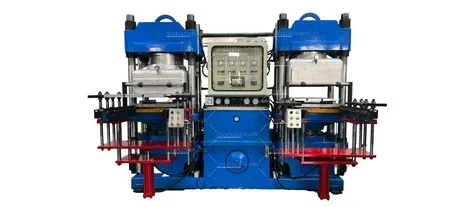
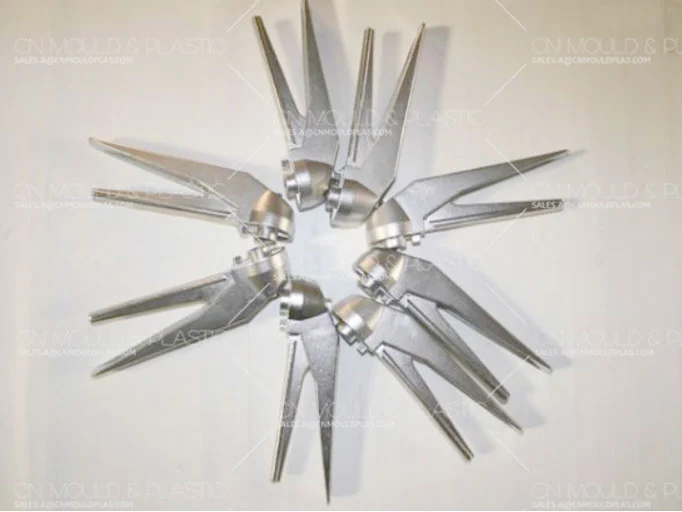
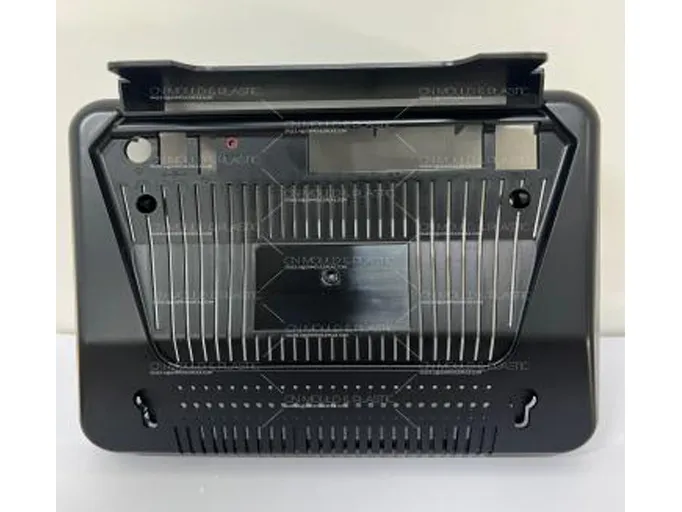
Injection molding is a cornerstone of manufacturing for plastic parts, and understanding its core stages is critical for successful mold testing (trial runs) and consistent production quality. The full injection molding cycle is a sequential, interconnected process—each step directly impacts the final part’s integrity, dimensional accuracy, and surface finish. Below, we break down the key phases of the injection cycle, from material loading to part ejection, with a focus on how each step influences mold performance and product outcomes.
The 6 Core Stages of the Injection Molding Cycle
A complete injection process comprises at least six essential stages: feeding, plasticizing, mold filling, packing/holding, cooling, and ejection. Each phase requires precise control of parameters (e.g., temperature, pressure, time) to avoid defects like warping, shrinkage, or voids—especially during mold testing, where optimizing these settings is the primary goal.
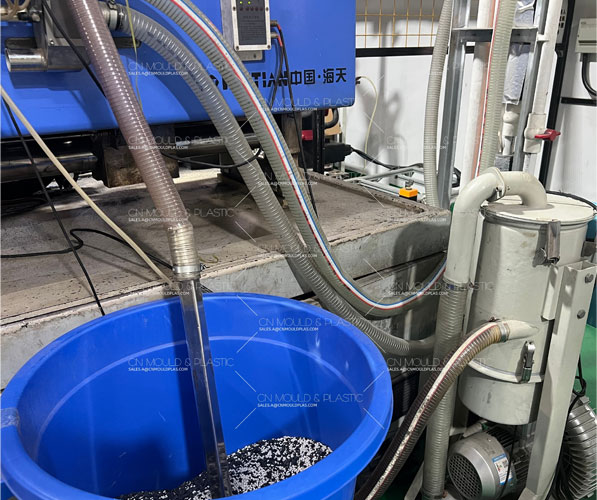
Feeding
The cycle begins with feeding raw plastic material into the injection molding machine.
• Process: Granular or powdered plastic is loaded into the machine’s hopper. From there, a plunger or screw conveys the material into the heated barrel, preparing it for melting.
• Key Note for Mold Testing: Ensure consistent material feeding (e.g., no clogs in the hopper) to avoid uneven plasticization later—this is critical for identifying whether defects stem from material flow or mold design.
Plasticizing
Plasticizing (or “melting”) transforms solid plastic into a homogeneous, flowable melt—an essential prerequisite for filling the mold cavity.
• Process: Inside the heated barrel, the plastic undergoes three key actions:
a. Heating: The barrel’s temperature zones gradually raise the material to its melting point (varies by plastic type, e.g., ~180–240°C for PP, ~220–280°C for ABS).
b. Compaction: The plunger or rotating screw applies pressure to squeeze air out of the material, preventing voids in the final part.
c. Mixing: The screw’s flights blend the melted plastic to ensure uniform temperature and consistency, eliminating lumps or unmelted particles.
• Outcome: The solid granular/powdered plastic is converted into a continuous, smooth melt ready for injection.
Mold Filling
This stage involves forcing the plastic melt into the mold cavity through the machine’s nozzle and the mold’s gating system.
• Process: The plasticized melt is pushed by injection pressure (applied via the plunger or screw) at a controlled speed. It travels through the nozzle, then flows through the mold’s runner system and gate —the narrow opening that feeds the melt into the cavity—until the cavity is fully filled.
• Critical for Mold Testing: Monitor fill speed and pressure closely. Slow filling may cause the melt to cool prematurely (leading to incomplete cavity filling), while excessive speed can trap air (causing bubbles) or create shear stress (damaging the plastic’s molecular structure).
Packing/Holding
After the mold cavity is filled, the packing/holding stage prevents shrinkage by replenishing melt as the plastic cools and contracts.
• Process: Once filling ends, the plunger or screw maintains pressure (called “holding pressure”) on the melt. This pushes additional melt into the cavity to compensate for volume loss as the plastic cools and solidifies.
• Key Considerations:
◦ Holding Time: Too long, and the part may develop internal stress (leading to warping or cracking). Too short, and the melt can “backflow” (see below).
◦ Backflow Risk: After holding pressure is released, the melt in the cavity may flow back through the gate into the runner system—if the gate hasn’t solidified yet. This causes defects like shrinkage, deformation, or porous material. A longer holding time helps the gate solidify, reducing backflow and improving part density.
Cooling (After Gate Freezing)
The cooling stage begins once the plastic at the gate is fully solidified—and it’s vital for part stability and dimensional precision.
• Process: From gate freezing until the part is ejected, the plastic in the cavity continues to cool, harden, and set. The mold’s cooling channels (built into the mold structure) circulate coolant to control the cooling rate.
• Defect Prevention:
◦ Residual Pressure: The difference between cavity pressure and atmospheric pressure (residual pressure) must be managed. If residual pressure becomes negative (cavity pressure < atmospheric pressure), the part may develop surface defects or internal voids.
◦ Uniform Cooling: Rapid, uneven cooling (e.g., inconsistent temperature across the mold cavity) causes uneven shrinkage and internal stress—leading to warping or cracking. During mold testing, verify that cooling channels distribute coolant evenly to avoid these issues.
Ejection
The final stage of the cycle is ejecting the fully cooled and solidified part from the mold.
• Process: Once the plastic part has enough rigidity to avoid deformation, the mold opens. An ejection system (e.g., ejector pins, plates, or sleeves) pushes the part out of the cavity.
• Mold Testing Focus: Check for ejection-related defects, such as scratches, marks, or part damage—these may indicate issues with the ejection system design (e.g., misaligned pins) or insufficient cooling (part too soft to eject cleanly).
By mastering each stage of the injection cycle, manufacturers can optimize mold testing outcomes, troubleshoot defects efficiently, and lay the groundwork for high-quality, scalable production. Whether you’re fine-tuning a new mold or refining an existing process, a deep understanding of these steps is key to minimizing waste and maximizing part reliability.

 English
  français
  Deutsch
  Español
  italiano
  русский
  português
  العربية
  dansk
dansk  Suomi
Suomi  Svenska
  norsk
norsk