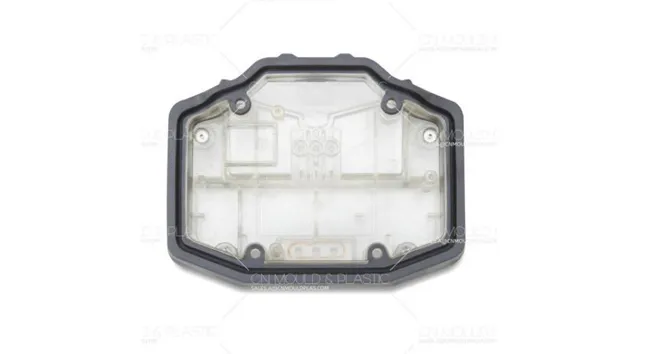
Take a look at any rubber mold after a few hundred shots. The surface isn't shiny anymore. There's a grey film building up. Parts start sticking, and cycle times creep up.
That film costs you time. Every time you stop to clean the mold, you lose production. The real question is: what is that stuff, and can you stop it from forming in the first place?
It’s Not Dirt. It’s Chemistry.
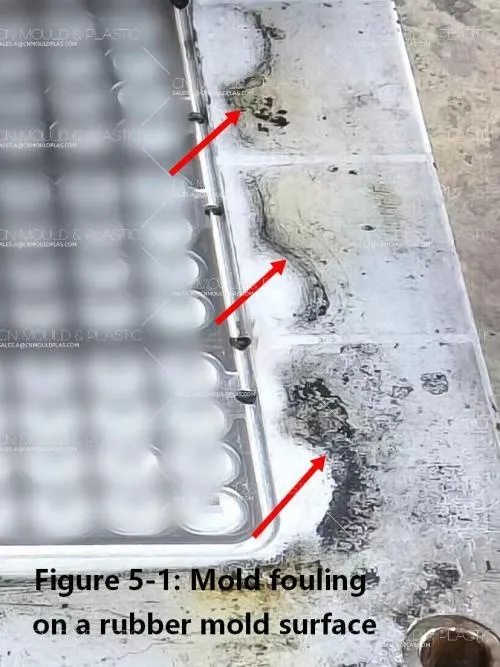
That grey layer isn't just residue from release agents or rubber oxidation. It's mostly zinc sulfide (ZnS) — a reaction byproduct that forms during vulcanization.
Here’s how it happens:
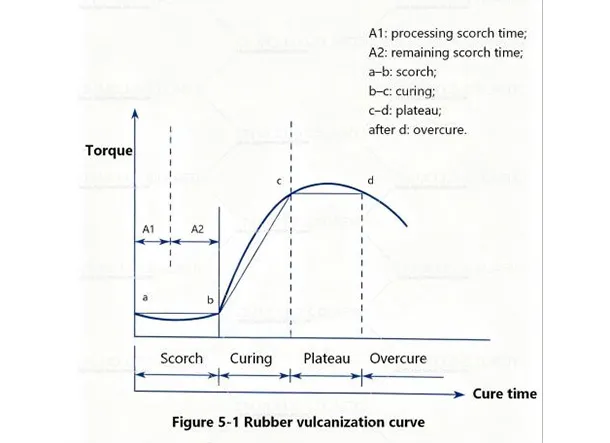
Zinc oxide and sulfur are essential ingredients in most rubber compounds. During vulcanization, they react to form zinc sulfide. Those sulfide particles are microscopic — typically 10–20 nanometers — but they don't stay microscopic for long. They deposit on the mold surface and accumulate over time, forming a thin grey layer that acts as a foundation for more buildup.
Once that layer is there, other things start sticking to it. Low‑molecular‑weight components in the rubber attach to the zinc sulfide crystals. Over time, oxidation products form, adding carbon deposits to the mix.
Three stages. Same result: a stubborn deposit that won't wash off and won't wipe away. And no release agent — semi‑permanent or otherwise — can fully prevent it.
Two Ways to Slow It Down
There's no magic fix for mold fouling. But there are two places you can intervene: the compound or the mold surface.
1.Start with the compound
Zinc oxide is necessary for curing, so you can't remove it entirely. But you can reduce it — and research shows that lowering zinc oxide from 5 phr to 3 phr can reduce deposition, though it won't eliminate it.
A more promising route is nano‑sized zinc oxide. At just 0.25 phr, it reacts more completely during vulcanization, leaving less residual material to form zinc sulfide. That means less scale over time.
Other metal oxides — like calcium or magnesium — don't solve the problem. They just create different types of deposit. And amine‑based accelerators can work, but they often come with drawbacks like odor or toxicity.
The practical move: talk to your compound supplier. Ask about lowering zinc oxide levels or testing a nano‑zinc formulation. It's not a quick fix, but it's one of the few changes that goes after the root cause.
2. Look at the mold surface
Metal coatings like chrome or nickel don't stop zinc sulfide from forming. The crystals grow on the surface itself, regardless of the metal underneath.
However, polymer coatings like PTFE can help — because they don't react with the deposit. The catch: PTFE can become brittle at high temperatures and may wear off over time.
Magnetite (Fe₃O₄) coatings show promise, though more testing is needed to confirm their effectiveness. And a clean, polished cavity won't stop the chemical reaction, but rough or textured surfaces tend to hold deposits more stubbornly. If you're running rubber parts, start with the smoothest surface you can practically maintain.
What About Mold Release Agents?
The right release agent can help, but it's not a cure. Some advanced products can reduce the frequency of cleaning by up to 50% — which is a real improvement. But they treat the symptom, not the cause. The zinc sulfide still forms; it just sticks a little less aggressively.
If you're currently cleaning molds every shift, a better release agent might extend that to every other shift. But you'll still be cleaning.

 English
  français
  Deutsch
  Español
  italiano
  русский
  português
  العربية
  dansk
dansk  Suomi
Suomi  Svenska
  norsk
norsk