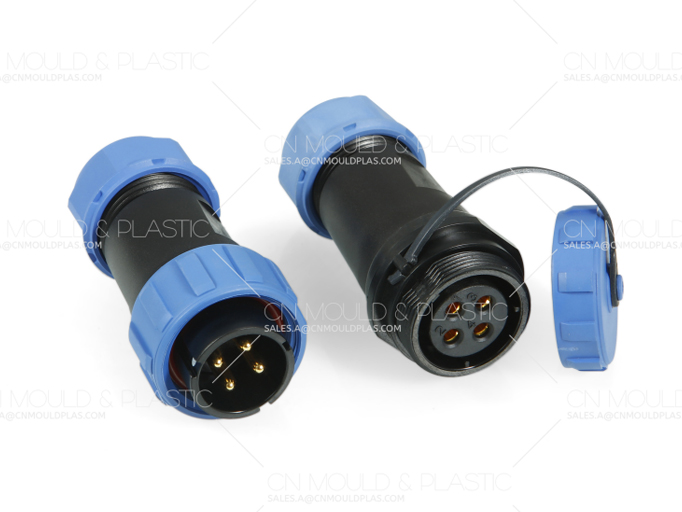
Customers always expect molded parts to meet the visual standards set by the drawings. However, these drawings often include finishing requirements that may not be entirely practical or necessary. This raises a key question: Should the entire part meet the specified finish, or only the surfaces visible to the end user? Alternatively, should the focus be on areas with special functional requirements, such as the costly "optical" mirror finish?
Typically, the roughness of the mold core only needs to be sufficient to ensure reliable ejection of the part. For certain plastics, however, a rougher core surface may be necessary to help the part stay on the core, making ejection easier from that side.
Texturing Options for Mold Makers
Mold makers have several texturing methods to choose from, each with its own advantages and challenges:
1. Authentic Texturing (Chemical Etching):
This method uses photo-chemical etching and requires professional expertise. While it delivers high-quality results, it can be expensive and often involves logistical issues such as high transportation costs and project delays.
2. EDM Texturing (Electrical Discharge Machining):
EDM allows for control over current intensity, enabling the creation of surfaces with varying degrees of roughness. This method requires electrodes shaped to match the surface being treated and can often be done in-house. Specially shaped electrodes can produce finishes similar to authentic texturing, but the process can be costly.
3. Sandblasting:
Sandblasting is a cost-effective way to achieve a satisfactory finish. It often involves using masks to protect areas that must remain polished. For molds used in producing PE (polyethylene) parts, fine sandblasting followed by polishing can be particularly effective for easy ejection. Highly polished surfaces, on the other hand, may cause plastic to adhere to the steel. Over time, it may even be necessary to lightly roughen the surface using sandblasting or sandpaper to ensure smooth ejection.

 English
  français
  Deutsch
  Español
  italiano
  русский
  português
  العربية
  dansk
dansk  Suomi
Suomi  Svenska
  norsk
norsk