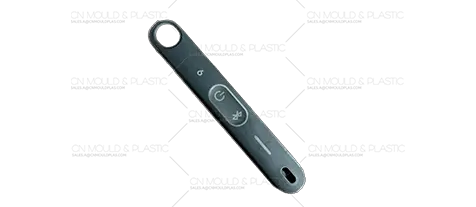
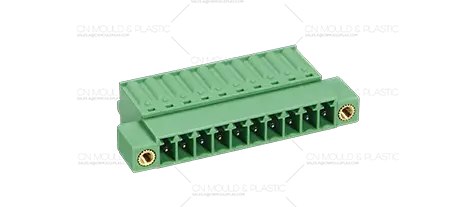
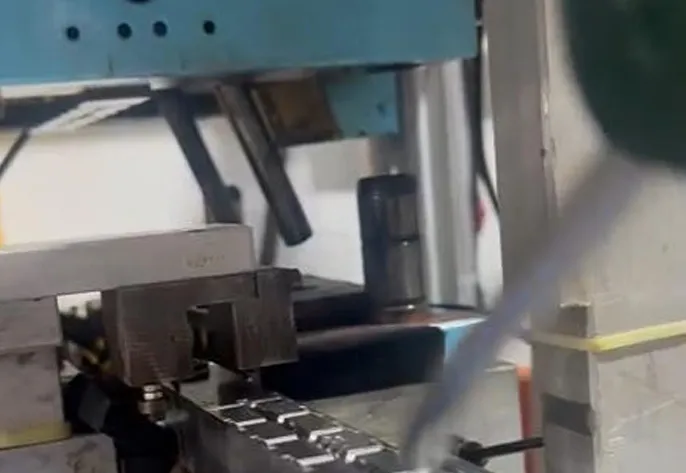
Inserting metal components into plastic parts is a common practice to meet assembly strength and functional requirements. Before injection, the insert is placed into a predetermined position within the mold. After molding, it becomes fully integrated with the plastic.
However, metal and plastic have significantly different thermal properties, and their shrinkage rates also vary. This mismatch can easily lead to cracks around the insert, compromising both surface quality and part strength.
How to Prevent Cracking Around Inserts
Two key strategies help address this issue:
Preheating reduces the temperature difference between the molten plastic and the insert. As a result, the plastic around the insert cools more slowly and shrinks more evenly, while also allowing melt compensation to occur. This minimizes internal stress and helps prevent cracking.
Which Inserts Require Preheating?
Whether preheating is necessary depends on the polymer’s molecular structure and the size of the insert:
Rigid-chain plastics (e.g., PC, PS, polysulfone, PPO) – These materials are inherently prone to stress cracking, so inserts must be preheated.
Flexible-chain plastics (e.g., PE, PP) with small inserts – In such cases, the insert can be adequately heated by the melt inside the mold and may not require preheating.
Preheating Parameters
Temperature: Typically between 110–130°C, without damaging the insert’s surface coating. For uncoated aluminum or copper inserts, the temperature can be raised to approximately 150°C.
Time: Usually only a few minutes are sufficient.

 English
  français
  Deutsch
  Español
  italiano
  русский
  português
  العربية
  dansk
dansk  Suomi
Suomi  Svenska
  norsk
norsk