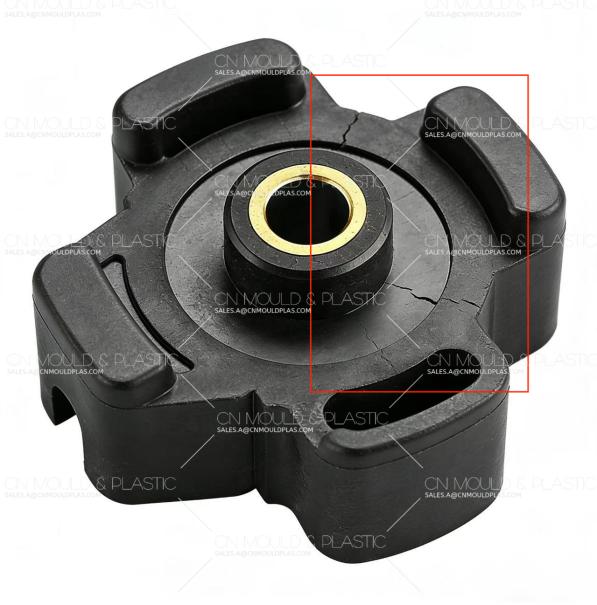
In injection molded parts, the state of internal stress varies across different regions, and the degree of part deformation is largely determined by the distribution of these stresses. The presence of internal stress not only leads to warpage and cracking during storage and use but also affects the mechanical, optical, and electrical properties, as well as the surface quality of the plastic product. In this post, we will systematically examine the formation mechanisms, influencing factors, and improvement methods for internal stress.
Formation Mechanisms
Flow-Induced Shear: Viscosity differences between the outer and inner layers during melt flow.
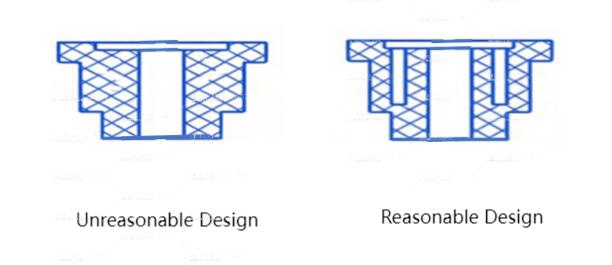
Non-Uniform Cooling: In thick-walled parts, the surface layer is under tension while the core is under compression.
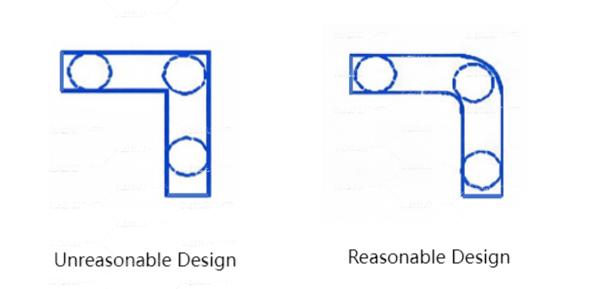
Stress Concentration: Caused by abrupt shape changes or the inclusion of metal inserts with different coefficients of thermal expansion.
Influencing Factors
Process Parameters: Improper settings for barrel temperature, mold temperature, injection/holding pressure, and cycle time can increase internal stress.
Part Design: Uniform wall thickness, rounded transitions, and well-designed insert structures help reduce stress.
Mold Design: Proper gate size and location, along with well-designed cooling and ejection systems, contribute to minimizing stress.
Material Selection: Choosing high-purity, modified, or low-stress materials helps with stress control.
Improvement Methods
Heat Treatment (Annealing): Immediately after demolding, heating the part to a temperature slightly below its heat deflection temperature, followed by slow cooling, can effectively reduce internal stress.
Process Optimization: Increasing mold temperature and extending cooling time can have effects similar to heat treatment.
Integrated Strategy: Heat treatment is not the only solution—stress should be controlled through a combination of optimized processes, appropriate material selection, and thoughtful part and mold design. Overly long heat treatment cycles may adversely affect material properties.

 English
  français
  Deutsch
  Español
  italiano
  русский
  português
  العربية
  dansk
dansk  Suomi
Suomi  Svenska
  norsk
norsk