Why Is Polishing Necessary?
The surface roughness of a mold directly affects the surface quality of the plastic part. As product requirements become more demanding, the surfaces created by standard machining or electrical discharge machining (EDM) often cannot meet the needed smoothness. That’s why polishing is required.
Polishing not only enhances the visual appearance of the final product but also offers the following benefits:
1. Plastic parts are easier to remove from the mold (better demolding)
2. Reduced flow resistance for the molten plastic, which also reduces mold wear
3. Lower risk of mold cracking or bursting caused by high stress or fatigue
Six Common Polishing Methods
1. Mechanical Polishing
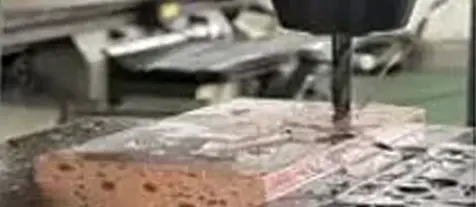
This method removes material by cutting or plastic deformation using tools like oilstones, wool wheels, or sandpaper. It is usually done by hand, as shown in the video. For rotating parts, auxiliary tools like rotary tables may be used. For very high surface quality, ultra-precision polishing is applied. This uses a special tool rotating at high speed in a polishing fluid containing abrasives, achieving a surface roughness as low as Ra 0.008 μm — the best of all methods. It is commonly used for optical lens molds.
2. Chemical Polishing
Chemical polishing works by dissolving the microscopic high spots on a surface faster than the low spots in a chemical solution. Its main advantages are: no need for complex equipment, ability to polish complex shapes, and high efficiency (many parts at once). The key is the polishing solution formula. Typical surface roughness achieved is around 10 μm.
3. Electrolytic Polishing
Similar to chemical polishing, this method selectively dissolves microscopic high spots using an electric current. It eliminates the side effects of chemical reactions and gives better results. The process happens in two steps:
Macro leveling (Ra > 1 μm): Dissolved products diffuse into the electrolyte, reducing geometric roughness.
Micro brightening (Ra < 1 μm): Anode polarization increases surface brightness.
4. Ultrasonic Polishing
The part is placed in an abrasive suspension and exposed to ultrasonic vibration. The abrasive particles are driven by the vibration to grind and polish the surface. This method uses very low mechanical force, so it does not deform the part. However, tooling is difficult to make and install. It can also be combined with chemical or electrolytic methods, where ultrasonic vibration helps remove dissolved products and distribute the solution evenly.
5. Fluid Polishing
This method uses a high‑speed liquid flow carrying abrasive particles to erode and polish the surface. Common techniques include abrasive jet machining, liquid jet machining, and hydrodynamic grinding. In hydrodynamic grinding, a polymer‑based abrasive compound is driven hydraulically to flow back and forth rapidly across the surface. Silicon carbide powder is often used as the abrasive.
6. Magnetic Polishing
Magnetic polishing uses magnetic abrasive particles that form a brush under a magnetic field to grind the workpiece surface. This method offers high efficiency, good quality, easy process control, and a clean working environment. With the right abrasive, surface roughness can reach as low as Ra 0.1 μm.
Choosing the Right Method
These six polishing methods are commonly used for mold components. The best choice depends on the specific product requirements, including shape complexity, desired surface finish, and production volume.

 English
  français
  Deutsch
  Español
  italiano
  русский
  português
  العربية
  dansk
dansk  Suomi
Suomi  Svenska
  norsk
norsk