You’re running the same material, the same settings, and the same machine model — but the parts still vary from shot to shot. Before you blame the mold or the material, check the machine.
Here’s a step‑by‑step checklist to help you find the source of the variation.
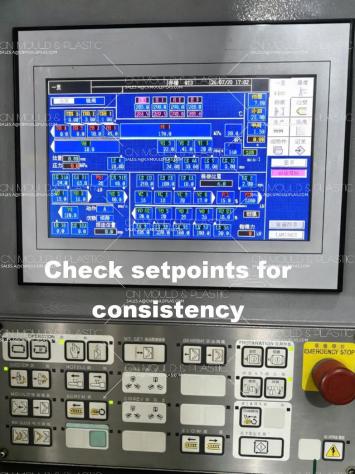
Verify the “Same Settings”
Settings on the screen don’t always match what’s happening on the floor:
Temperature – Check the actual air temperature at the dryer and the actual mold surface temperature. Sensor drift and clogged cooling channels are common culprits.
Process parameters – Back pressure, screw speed, and hydraulic oil temperature affect melt consistency. Even with the same setpoints, these can differ between machines.
Hydraulic oil – Oil volume and temperature affect viscosity. If the oil is hotter, the injection response changes.
If all these are consistent, move on to the next step.
Watch the Pressure Curve
Monitor the proportional current output and the injection pressure curve:
This is one of the quickest ways to identify a failing seal without dismantling the cylinder.
If the pressure curve is stable, continue.
Check the Plasticizing Unit
Inconsistent melt quality often comes from the screw and barrel assembly:
Worn screw flights → Poor conveying or mixing.
Damaged check ring → Melt slips back, causing inconsistent shot size.
Contamination in the nozzle → Partially blocked tip or damaged insert.
Remove the nozzle and inspect the screw tip assembly if you suspect wear or debris.
If the plasticizing unit is clean and intact, the problem is likely machine‑to‑machine variation.
Consider Machine Wear and Operating History
Identical machines are never truly identical. Different run hours, mold histories, and maintenance practices create different wear patterns—which means the same settings may not deliver the same performance.

 English
  français
  Deutsch
  Español
  italiano
  русский
  português
  العربية
  dansk
dansk  Suomi
Suomi  Svenska
  norsk
norsk