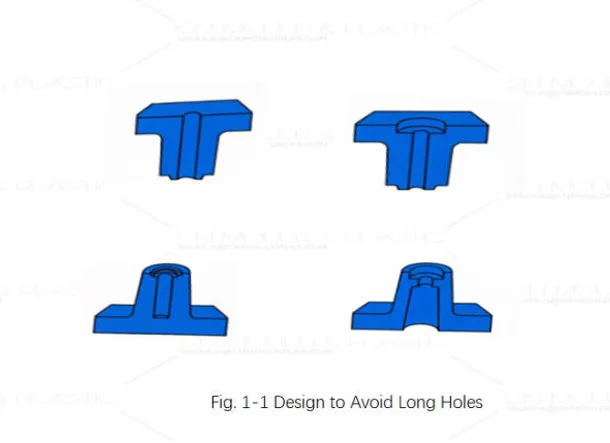
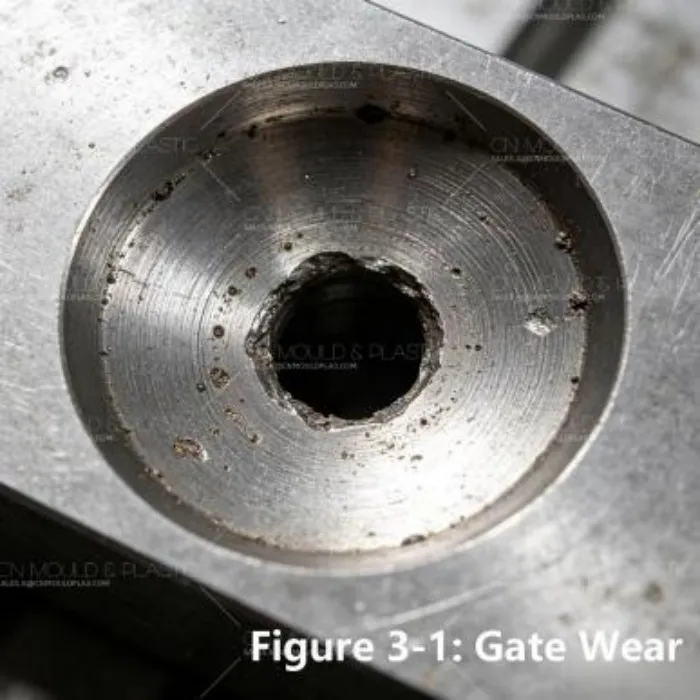
The gate is one of the most heavily stressed areas in an injection mold. Molten plastic passes through it at extremely high speeds — in thin‑wall molding, sometimes approaching the speed of sound. This high‑velocity flow, combined with the heat generated at the gate, gradually wears the gate opening, as shown in Figure 3-1. Over time, the gate enlarges, part quality degrades, and the mold requires maintenance.
To address this, mold makers often design the gate area as a replaceable insert. This allows quick, cost‑effective replacement without scrapping the entire cavity. However, the choice of insert material involves a trade‑off — and that trade‑off is the focus of this article.
Two Common Insert Materials
Beryllium copper offers excellent thermal conductivity, drawing heat away from the gate quickly for cleaner gate break‑off and shorter cycle times. It is also relatively soft and easy to machine, making replacement inserts quick and inexpensive to produce. The downside: poor wear resistance. The gate opening enlarges faster than with steel, requiring more frequent replacement. If you choose beryllium copper, design the gate area as a simple, low‑cost insert — so daily maintenance can be done without removing the mold from the press.
Hardened tool steel or carbide provides superior wear resistance, extending gate life — often the only practical choice for highly abrasive plastics. But the trade‑offs are significant: lower thermal conductivity means heat builds up at the gate, extending cycle time. And machining hardened steel — especially carbide — requires specialized tooling, grinding, or EDM, making inserts more expensive to produce. For steels like H13, worn gates can be welded and re‑machined, but this requires specialized equipment and skilled labor.
Making the Manufacturing Decision
In production, the decision comes down to what you prioritize. Beryllium copper inserts cost less to machine, replace faster, and improve cycle time — but they wear faster. Steel or carbide inserts cost more upfront and take longer to produce, but they last longer and reduce maintenance frequency.
Whichever material you choose, making the gate area a replaceable insert is the most practical approach for long‑term mold maintenance. Stocking spare inserts for critical gates is a simple way to avoid unplanned downtime.

 English
  français
  Deutsch
  Español
  italiano
  русский
  português
  العربية
  dansk
dansk  Suomi
Suomi  Svenska
  norsk
norsk