The cooling system removes heat from the injection molding machine through heat transfer, controlling the temperature to ensure product quality and equipment stability. Therefore, regular inspection and maintenance of the cooling system are necessary.
1. Cooler Inspection
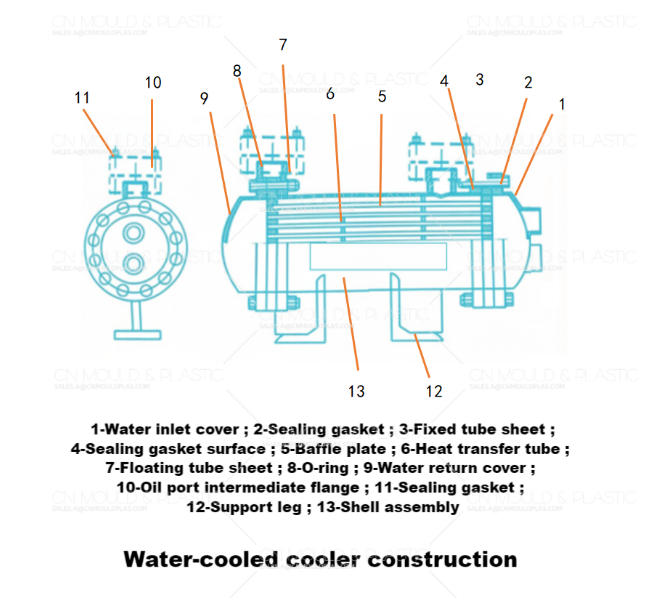
(1) Inspect the water inlet cover, water return cover, fixed tube sheet, floating tube sheet, surfaces in contact with the cooling medium, and the inner walls of the heat transfer tubes for scale buildup, dirt, or signs of corrosion.
(2) Check all sealing gaskets for any damage.
(3) Examine the outer surfaces of the heat transfer tubes, the inner surface of the shell, and the surfaces of the fixed and floating tube sheets that come into contact with the oil for dirt, debris, or corrosion.
For a thorough inspection, it is best to remove the heat exchanger from the machine.
Under standard city water supply (or similar) conditions, conduct an inspection approximately every six months.
For industrial water, groundwater, or water with high salt content, inspect about once a month.
The inspection interval should be adjusted based on the actual operating condition of the equipment.
2. Cooler Maintenance
If the cooler is not to be used for an extended period, drain all fluids from the unit. During shutdowns, to prevent freezing, the fluid inside the cooler should be drained immediately.
3. Cooler Cleaning
If the cooling performance declines, dirt may have accumulated inside the tubes. Remove the end caps from both sides and check for signs of corrosion or debris.
Perform cleaning at least once every six months. Use an alkaline cleaning solution to clean the inside of the main body and the exterior of the heat transfer tubes. For stubborn layered deposits, a mild hydrochloric acid solution can be used to clean the main body and tubes, followed by thorough rinsing. If heavy scale buildup is present on the inner walls of the heat transfer tubes, apply a scale-dissolving cleaning agent, let it soak, and then rinse thoroughly with clean water and a soft brush.

 English
  français
  Deutsch
  Español
  italiano
  русский
  português
  العربية
  dansk
dansk  Suomi
Suomi  Svenska
  norsk
norsk