You calculated the shot size. The formula said it should work. Then you ran the press — and it came out short.
The problem is, the machine doesn’t match the math. Melt density changes with temperature. Some material leaks back through the screw channels. So the theoretical number is just a starting point.
Here’s how to find what your machine can actually deliver.
The Theoretical Maximum
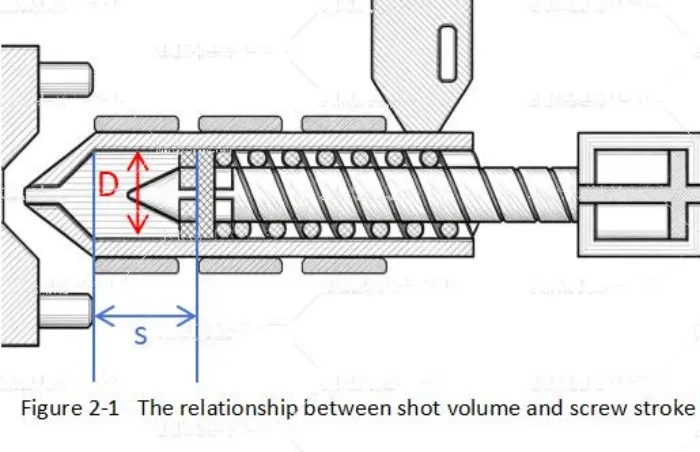
The theoretical shot volume is determined by the screw diameter and stroke:
Qᴸ = (π/4) × D² × S
Where:
Qᴸ = theoretical maximum shot volume (cm³)
D = screw or plunger diameter (cm)
S = maximum screw stroke (cm)
Figure 2-1 shows the relationship between shot volume and screw stroke.
But that’s the best‑case number — and you’ll never see it on the shop floor.
Why Actual Shot Size Never Matches Theoretical
Two factors get in the way:
Melt density changes – Plastic density isn’t fixed. It shifts with temperature and pressure, so the same volume doesn’t always weigh the same.
Backflow (leakage) – Melt flows backward through the screw channels under pressure, reducing the net amount pushed forward.
The result? Actual shot size typically runs 70–90% of theoretical.
The Injection Coefficient (α) – Your Reality Check
Q = α × Qᴸ
Where:
The injection coefficient (α) accounts for everything the formula ignores: material behavior, screw geometry, mold design, injection speed, pressure settings, and back pressure.
Rule of thumb:
For most general‑purpose applications, α = 0.8 is a safe starting point — but it’s not a fixed number.
The right way to find your machine’s actual coefficient? Run a few test shots, measure the output, and calculate backward. That number — not the one in the catalog — is what you should use for production planning.
What This Means for Your Project
If your production team is using theoretical shot size to plan material orders or cycle times, you’re likely overestimating output and underestimating material costs. Running test shots to determine your machine’s actual coefficient is a small investment that saves money and prevents delivery delays.

 English
  français
  Deutsch
  Español
  italiano
  русский
  português
  العربية
  dansk
dansk  Suomi
Suomi  Svenska
  norsk
norsk