Dimensional inspection ensures plastic parts meet the required specifications. Below are the key aspects of this process.
General Dimensional Inspection Method
Parts used for dimensional measurement must be molded on a production machine using production-grade materials. Changes in either the machine or the material can affect part dimensions.
The ambient temperature for measurement should be specified in advance. Parts should be conditioned according to standard procedures before measurement. For precision parts, measurements should be carried out in a temperature-controlled room at 23°C ± 2°C.
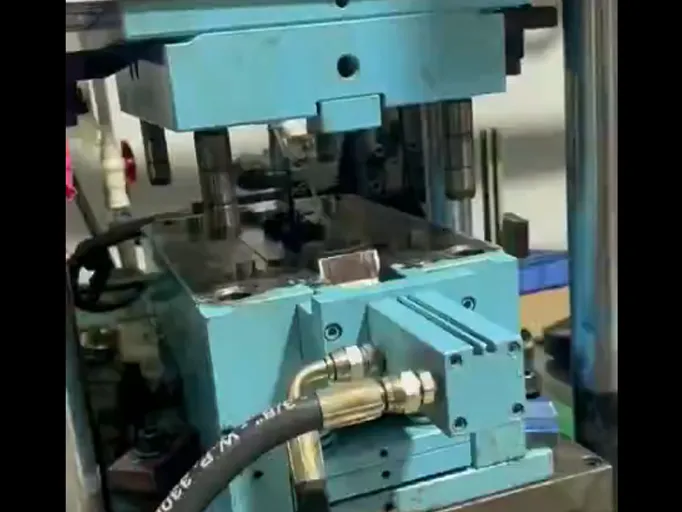
For general parts, a single part molded under stable process conditions is usually measured and compared to the drawing, as shown in the video.
For precision parts, 100 consecutive parts are molded under stable conditions. Their dimensions are measured and plotted on a statistical chart. The results should fall within three times the standard deviation, and the mean value should be within one-third of the standard tolerance range.
Common measuring tools include steel rulers, calipers, micrometers, and dial gauges. Note that metal‑type dial gauges apply high contact pressure, which can deform soft plastics. Where possible, use measuring tools specifically designed for plastics. All tools and instruments should be calibrated regularly and labeled with a certification sticker.
Measurement records must be kept. Acceptance is determined by comparing the results to the drawing or technical agreement.
For parts with low precision requirements, in‑house tools such as go/no‑go gauges are often used, but dimensional accuracy must still be maintained.
Self‑Tapping Screw Hole Inspection
Self‑tapping screw holes must be tightly controlled. If the hole is too small, the boss may crack when the screw is driven in. If too large, the screw will not hold.
These holes are typically inspected using go/no‑go gauges (the go gauge must pass, the no‑go gauge must not). The typical precision for self‑tapping screw hole diameter is +0.05 to +0.1 mm. Care should be taken not to force the gauge.
Fitting Dimensions Inspection
When two or more parts are assembled together, they must be interchangeable. A good fit means the parts do not deform when assembled, and they do not fall apart or loosen when lightly tapped from the side.
Warped Part Measurement
Place the part on a flat surface and use a feeler gauge to measure warpage. Small parts can be measured with a caliper, but avoid applying pressure.
Toolmaker's microscope inspection
This is a non‑contact optical measurement method, making it ideal for precision parts because the part does not deform during inspection. The main drawbacks are the need for a controlled temperature environment and the high cost of the equipment. Nevertheless, it is an indispensable method for measuring high‑precision plastic parts.

 English
  français
  Deutsch
  Español
  italiano
  русский
  português
  العربية
  dansk
dansk  Suomi
Suomi  Svenska
  norsk
norsk