Material Properties
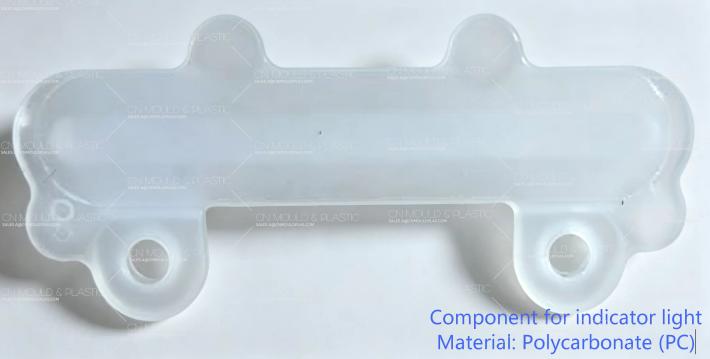
Polycarbonate (PC) is a colorless, transparent engineering plastic with a density of 1.18–1.20 g/cm³ and light transmittance up to 90%. It offers high strength, excellent dimensional stability, good colorability, and outstanding electrical insulation, corrosion resistance, wear resistance, and chemical resistance. PC also exhibits excellent creep resistance.
Limitations: PC has limited self-lubricating properties, is prone to stress cracking, easily hydrolyzes at high temperatures, and has poor compatibility with other resins. It is ideal for small instrument parts, transparent insulating components, and impact-resistant parts.
Processing Characteristics
Amorphous nature: PC has no precise melting point, with a glass transition temperature of 149–150°C and a melting range of 215–225°C. It offers good thermal stability with a wide molding temperature range (230–320°C) but has poor flowability.
Moisture sensitivity: Although PC has low moisture absorption, it is highly sensitive to water and easily hydrolyzes and degrades. Thorough drying is required before processing.
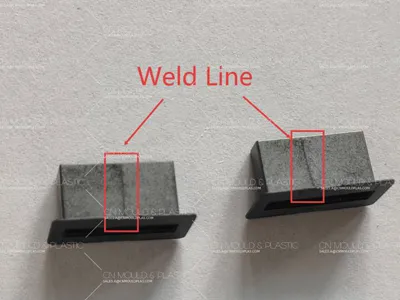
Shrinkage and stress: Molding shrinkage is low (0.5–0.8%), but PC is prone to melt cracking and stress concentration. Strict process control and post‑molding annealing are necessary.
High viscosity and temperature: Due to its high melt viscosity and poor flowability, PC requires high injection temperatures (270–320°C). Increasing temperature improves flow better than raising pressure, which helps reduce internal stress.
Cooling and mold design: PC cools quickly. Runner systems should be short and wide, with a cold slug well and large gates. Mold heating is often required.
Temperature effects: Low melt temperature causes short shots and dull surfaces. High temperature leads to flash and bubbles. High mold temperature (above 120°C) slows cooling, causing deformation and sticking.
Injection Molding Conditions
1. Melt Temperature Control
For most PC parts, barrel temperature should be 250–310°C.
Machine type:
Nozzle temperature: Equal to or 5–10°C lower than the front barrel temperature (260–310°C). Too high causes drooling; too low may freeze the nozzle.
Feed zone temperature: Should exceed PC’s softening point (above 230°C) to reduce flow resistance and pressure loss.
2. Mold Temperature
PC requires high mold temperatures (80–120°C) to prevent surface defects and internal stress.
Mold temperature too low (below 80°C) leads to poor filling, shrinkage, flow marks, and severe residual stress — parts may crack immediately after ejection. Mold temperature too high (above 120°C) slows cooling, increases cycle time, reduces surface gloss, and causes sticking and warpage.
3. Injection Pressure
PC's high viscosity requires higher injection pressure, especially for thin‑wall, long‑flow, or complex parts.
Use low pressure and slow speed whenever possible to minimize residual stress. High pressure and fast speed cause turbulent flow, air entrapment, melt fracture, and increased internal stress. However, insufficient pressure leads to shrinkage and voids.
Injection speed: Mainly depends on flow length and cross-sectional thickness.
4. Holding Pressure and Time
Holding time significantly affects part quality.
Too short: shrinkage, voids, or vacuum bubbles
Extended: increased density, void elimination, stable dimensions, but higher internal stress and risk of cracking
Recommendation: Use low holding pressure and short holding time to minimize internal stress while achieving good part performance.
5. Back Pressure
Back pressure should be 10–15% of injection pressure.
Too high: longer plasticization time, risk of thermal degradation
Too low: poor venting, insufficient melt densification, uneven temperature and color

 English
  français
  Deutsch
  Español
  italiano
  русский
  português
  العربية
  dansk
dansk  Suomi
Suomi  Svenska
  norsk
norsk