Impact performance is not simply a "material property" — it is closely tied to part geometry, wall thickness, dimensions, and the direction of the applied force. When a moving object strikes a plastic part, the kinetic energy must be absorbed or dissipated within a fraction of a second. If the material or design cannot effectively cushion the impact, the part may fail through brittle fracture, cracking, or localized crushing.
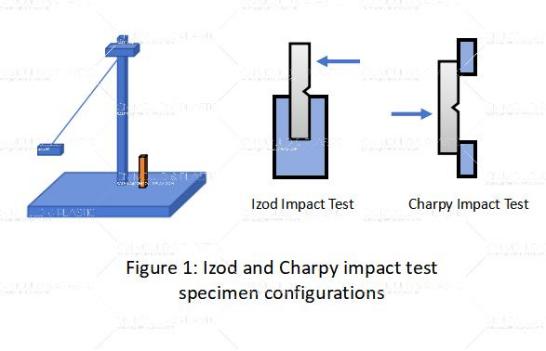
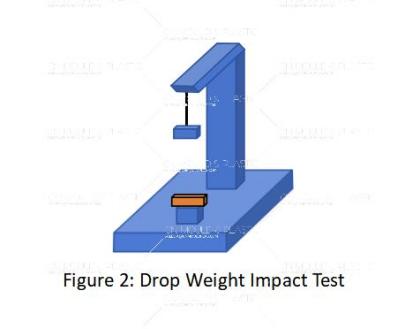
To evaluate this behavior, engineers rely on several standardized impact testing methods, as shown in Figure 1 and Figure 2.
Izod Impact Test
In the Izod test, one end of the specimen is clamped in a fixed position, and the impact point is located near a machined notch. A pendulum swings down to strike the specimen, and the energy absorbed during fracture is measured. This method places high demand on the material's ability to resist crack propagation, making it particularly suitable for evaluating brittleness and toughness under localized impact.
Charpy Impact Test
The Charpy test uses a specimen placed horizontally across two supports, with the impact point at the center. The specimen may be unnotched or contain a V‑shaped or U‑shaped notch. The absorbed energy or impact strength is recorded. Notched specimens are especially useful for assessing notch sensitivity and comparing the overall toughness of different materials.
Drop Weight Impact Test
In this method, a weighted tup (hammer) is dropped from a specified height onto a horizontally supported specimen. The test can be performed on finished parts or large‑scale test specimens, making it highly relevant to real‑world impact scenarios — such as accidental drops or collisions.
Two common approaches are used:
Pass/Fail Method – A fixed weight is dropped from a set height onto a group of specimens. If at least 60% of the specimens survive without failure, the part passes. This method is widely used for fast quality checks on production lines.
Staircase (Up‑and‑Down) Method – The drop height or weight is varied progressively to statistically determine the 50% failure energy. This approach provides a more precise and reliable measure of the material's critical impact resistance, making it ideal for material development and process optimization.
Why Impact Testing Matters
Impact testing is essential for assessing a material's ability to withstand sudden forces during service — such as drops, collisions, or assembly impacts. It provides critical data for:
Material selection and comparison
Evaluating low‑temperature brittleness risk
Verifying formulation or process changes
Ensuring batch‑to‑batch consistency
Selecting the appropriate test method, while carefully controlling notch geometry and test temperature, is key to obtaining repeatable and comparable data.

 English
  français
  Deutsch
  Español
  italiano
  русский
  português
  العربية
  dansk
dansk  Suomi
Suomi  Svenska
  norsk
norsk