Wire EDM (Electrical Discharge Machining) is a versatile machining process that uses a spark to erode material. The process is capable of machining complex shapes with high precision and accuracy.
The wire EDM process is controlled by a number of parameters, including:
1. Wire tension: The tension applied to the wire.
2. Pulse on time: The duration of each spark.
3. Pulse off time: The time between sparks.
4. Peak current: The maximum current that flows through the wire.
5. Gap voltage: The voltage between the wire and the workpiece.
6. Workpiece material: The type of material being machined.
7. Dielectric fluid: The fluid used to flush the cutting zone.
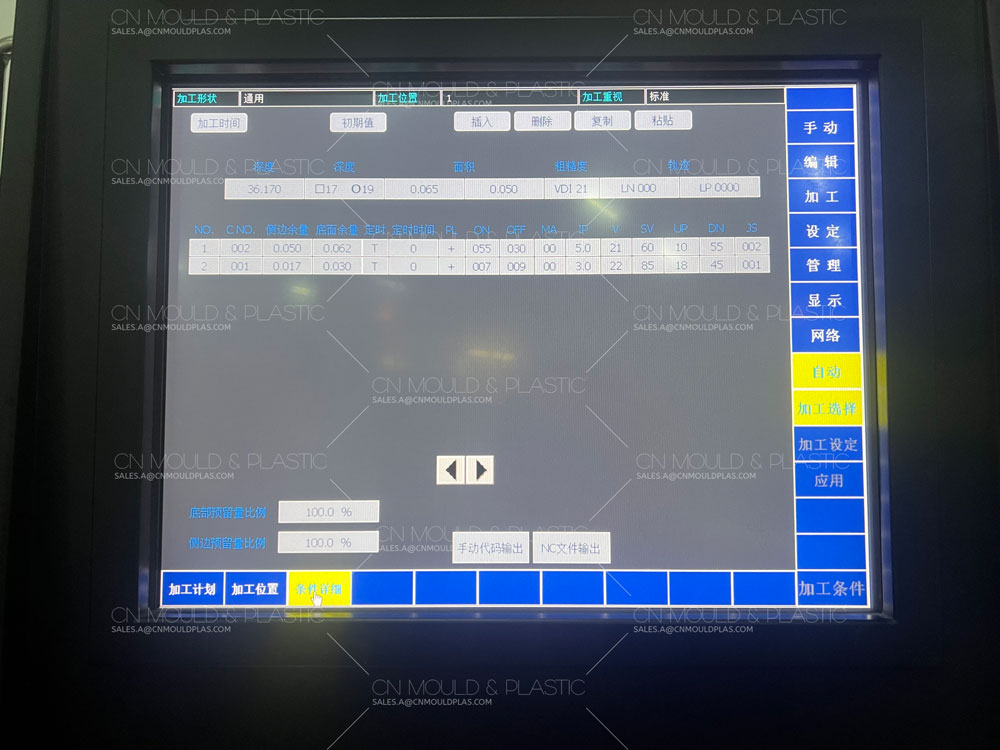
These parameters interact with each other to affect the machining results. For example, increasing the wire feed rate will increase the cutting speed, but it may also reduce the surface finish. Increasing the pulse on time will increase the material removal rate, but it may also increase the wire wear.
The optimal settings for the wire EDM process will depend on the specific application. However, there are some general guidelines that can be followed to achieve good results.
1. Use a sharp wire: A sharp wire will produce a better surface finish and reduce wire wear.
2. Maintain the correct wire tension: The wire tension should be high enough to prevent the wire from vibrating.
3. Use a high-quality dielectric fluid: The dielectric fluid should be clean and free of contaminants.
4. Follow the manufacturer's recommendations: The manufacturer's recommendations for the wire EDM process should be followed to achieve the best results.
Effects of Process Parameter Changes:
The following are some of the effects that changes in process parameters can have on the machining results:
1. Changes in wire tension:
* Increasing the wire tension will improve the surface finish.
* Increasing the wire tension may increase the wire wear.
* Too high wire tension may break the wire.
2. Changes in pulse on time:
* Increasing the pulse on time will increase the material removal rate.
* Increasing the pulse on time may increase the wire wear.
3. Changes in pulse off time:
* Increasing the pulse off time will reduce the wire wear.
* Increasing the pulse off time may reduce the cutting speed.
4. Changes in peak current:
* Increasing the peak current will increase the material removal rate.
* Increasing the peak current may increase the wire wear.
5. Changes in gap voltage:
* Increasing the gap voltage will increase the cutting speed.
* Increasing the gap voltage may reduce the surface finish.
6. Changes in workpiece material:
* Different workpiece materials will require different process parameters.
* Harder materials will require lower cutting speeds and higher pulse on times.
* Coated wires can be used to improve the surface finish or reduce wire wear.
7. Changes in dielectric fluid:
* The dielectric fluid should be clean and free of contaminants.
* The dielectric fluid should be compatible with the workpiece and wire materials.
By understanding the effects of process parameter changes, machinists can optimize the wire EDM process to achieve the desired results.

 English
  français
  Deutsch
  Español
  italiano
  русский
  português
  العربية
  dansk
dansk  Suomi
Suomi  Svenska
  norsk
norsk