Common methods include drilling, core drilling, reaming, boring, internal grinding, and lapping. This article covers: boring, internal grinding, and lapping. These processes are used for higher precision, larger diameters, or special workpiece conditions.
1. Boring
Boring is a highly versatile machining process. It can be used for both roughing and finishing, and it is especially valuable in single‑piece or small‑batch production. Non‑standard holes, large‑diameter holes, precise short holes, blind holes, and holes in non‑ferrous metal workpieces are often machined by boring.
Boring can be performed on different machines. On a lathe, the workpiece rotates while the cutting tool remains stationary. On a boring machine or a milling machine, the workpiece is stationary and the tool rotates.
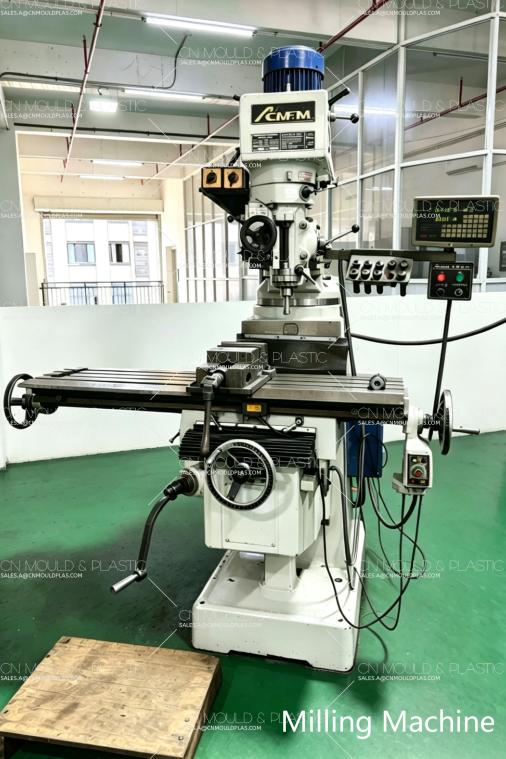
The boring bar or boring tool is often limited in rigidity because its size is constrained by the hole diameter. This can lead to deflection and vibration, and productivity may be lower. However, boring does not require special‑purpose tools. The boring tool itself is simple in construction, and the process can correct positional errors of the hole. For these reasons, boring remains a common machining method in single‑piece and small‑batch production.
Key accuracy considerations:
1) On a lathe: The hole centerline aligns with the workpiece rotation axis. Feed deviation affects form and diameter but not position — important for maintaining concentricity.
2) On a boring/milling machine: Feed deviation affects hole position but has little effect on diameter or form.
Maintaining machine accuracy, increasing rigidity, and reducing vibration are essential for high‑quality boring.
2. Internal Grinding
Internal grinding is a common finishing method for hardened workpieces, holes with interrupted surfaces, and short precision bores. However, it presents several challenges.
Challenges compared to external grinding:
1) The grinding wheel and spindle are limited by the hole diameter, so the spindle is less rigid and the wheel must rotate at very high speeds to achieve the normal grinding speed (25–30 m/s). This leads to rapid wheel wear and frequent dressing.
2) The contact area between the wheel and the hole wall is relatively large, reducing pressure per unit area and making the wheel less self‑sharpening. Softer wheels are often needed, but they still require regular dressing.
3) Coolant cannot easily reach the grinding zone, and chip removal is difficult.
Despite these issues, internal grinding remains essential for hardened holes, short bores, and non‑standard or blind holes in small batches.
Common quality problems and solutions:
1) Bell mouth (flared hole) – Caused by the wheel overhang changing the contact length. To prevent this, reduce the depth of cut and limit wheel overhang to no more than half of the wheel width.
2) Cylindricity error – Results from misalignment between the workpiece spindle axis and the wheel axis, excessive depth of cut, or wheel loading (clogging). Solutions include realigning the headstock, controlling cut depth, and dressing the wheel regularly.
3) Poor surface finish – Caused by improper wheel dressing, wheel loading, excessive axial feed rate, or spindle runout. Use fine dressing, optimize cutting parameters, and choose higher‑precision abrasive tools.
4) Surface burns – Mainly due to overly coarse wheel grit, excessive depth of cut, or insufficient cooling. To avoid burns, use a finer grit, reduce cut depth, and ensure adequate coolant supply.
5) Scratches – Can occur when the wheel diameter is too large, causing loose abrasive grains to become trapped between the wheel and the hole wall, or from uneven wheel wear. The recommended wheel diameter is 0.5 to 0.9 times the hole diameter.
3. Lapping
Lapping uses a cast iron or copper mandrel with grooves to hold lapping compound. The mandrel rotates, and the workpiece is moved back and forth by hand or in a floating fixture, creating complex relative motion for uniform material removal.
Key characteristics:
1) Achievable tolerance: IT6 or better; surface roughness down to Ra 0.04 μm.
2) Cannot correct positional errors of the hole.
3) Low productivity.
4) Pre‑finishing (fine grinding, reaming, or fine boring) is required to minimize lapping allowance.
5) Typical allowance: 0.005~0.01mm.

 English
  français
  Deutsch
  Español
  italiano
  русский
  português
  العربية
  dansk
dansk  Suomi
Suomi  Svenska
  norsk
norsk