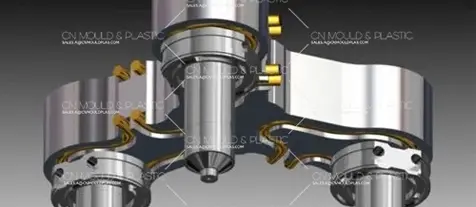
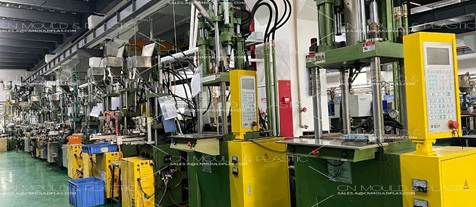
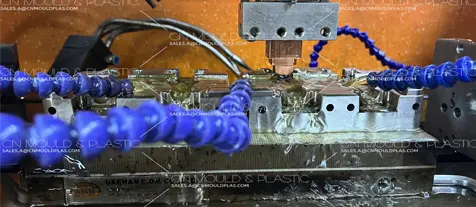
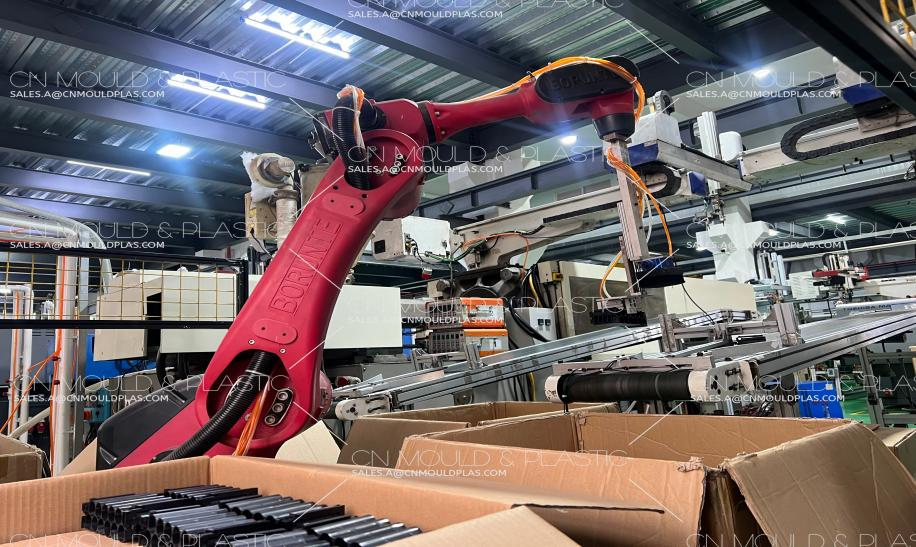
In most cases, a mold is designed to produce just one part. That's because different shapes fill at different speeds — the slowest cavity dictates the entire cycle, so combining multiple parts often reduces productivity.
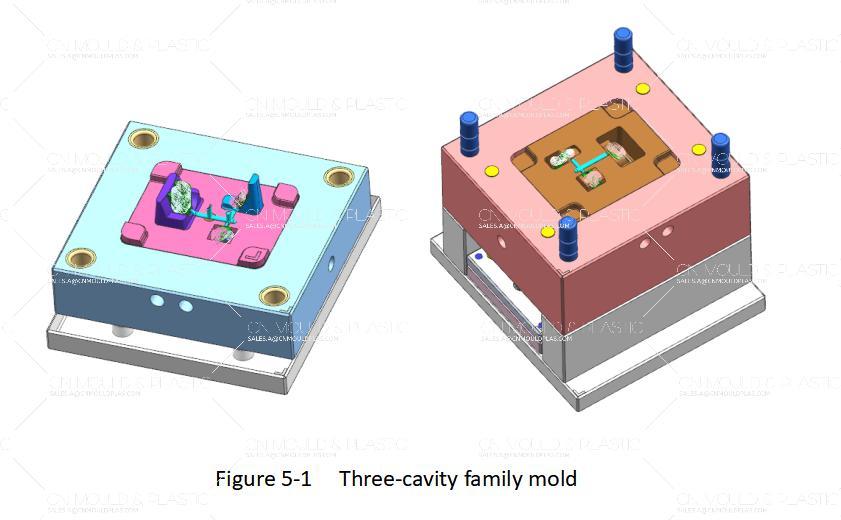
But what if you need several different parts — same material, same color — in matching quantities, but the total volume for each is low? In this case, a family mold (multiple cavities for different parts in one tool) can be a smart cost‑saving move.
The logic is simple: one mold costs less than two or three separate molds. For small production runs where tooling cost is a major part of the overall budget, sharing a mold can cut costs dramatically.
Where Does This Actually Save?
Upfront tooling cost – Instead of paying for multiple molds, you pay for just one. Even if it is slightly more complex than a single‑cavity mold, it is still far cheaper than two or three separate tools.
Assembly efficiency – If the parts are meant to be used together — like a lid and a base, or two halves of a housing — a family mold can deliver them in correct quantities and perfect color match. This reduces sorting, handling, and assembly time.
Inventory simplification – When parts are produced in matched sets, you don't end up with excess stock of one component and shortage of another. This helps keep inventory lean.
What Are the Risks?
Family molds are not always a win. The main trade‑offs include:
Slower cycle – The fastest‑filling cavity will be held back by the slowest one. This adds time to every shot.
Scrap risk – If one cavity produces a defective part and the issue goes unnoticed, the entire shot is wasted — resulting in incomplete sets.
Replacement difficulty – If only one part in the set wears out or breaks frequently, you cannot mold that single part alone. You must run the whole mold, which creates unnecessary surplus of other components.
Material limitation – All parts share the same resin, even if a different grade would suit one part better.
When Do Family Molds Make Sense?
Not all products are suitable for family molds. The best candidates share three characteristics:
Balanced cycle times – All parts fill and cool at similar speeds, so cycle time is not compromised.
Immediate assembly – Parts are paired right out of the mold (e.g., clamshells, cassette housings, flatware sets), reducing handling and improving efficiency.
Strict color match – Components that must look identical in color — such as powder compact lids and bases — should come from the same melt batch. Family molds guarantee this.

 English
  français
  Deutsch
  Español
  italiano
  русский
  português
  العربية
  dansk
dansk  Suomi
Suomi  Svenska
  norsk
norsk