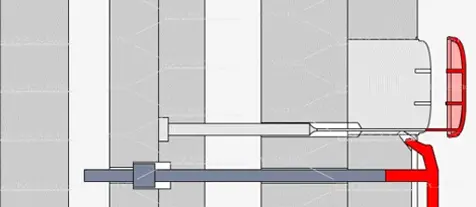
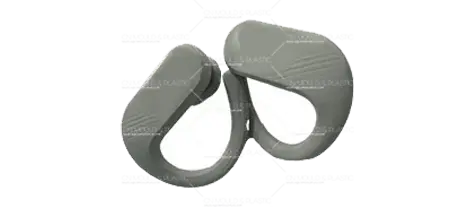
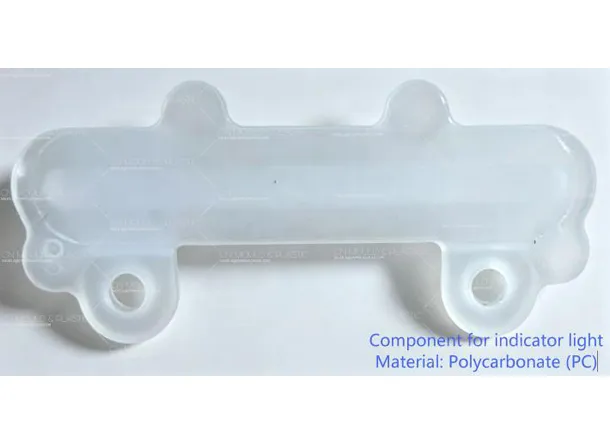
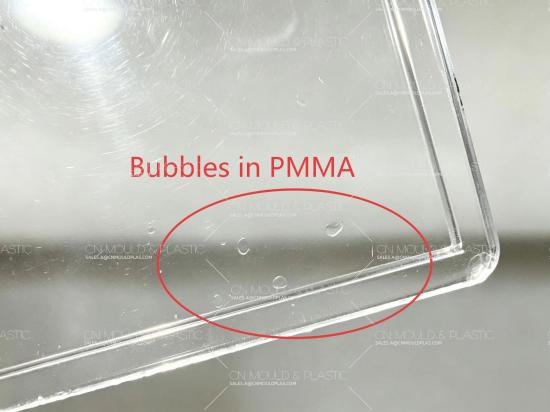
Bubbles trapped inside plastic parts can cause circular protrusions on the surface, as shown in the Figure. These voids can occur not only in thick wall sections but also in other areas, with varying sizes and shapes. Below is a brief analysis of the factors that contribute to bubble formation in injection molded parts.
Air Entrapped in the Melt
If the material melts too early in the compression zone during plasticization, air becomes trapped inside the melt and cannot escape through the feed throat.
In addition, excessive screw speed, low back pressure, or overly large and fast screw decompression (suck‑back) can pull air directly into the barrel, further increasing the risk of gas entrapment.
Gases from Material Degradation
When the melt temperature is too high, heat‑sensitive resins may decompose and release gases that form bubbles.
Overly long residence time or excessive melt hold‑up in the barrel can overheat the material and cause decomposition as well
Certain flame retardants and colorants are particularly prone to thermal degradation, further increasing the risk of gas formation.
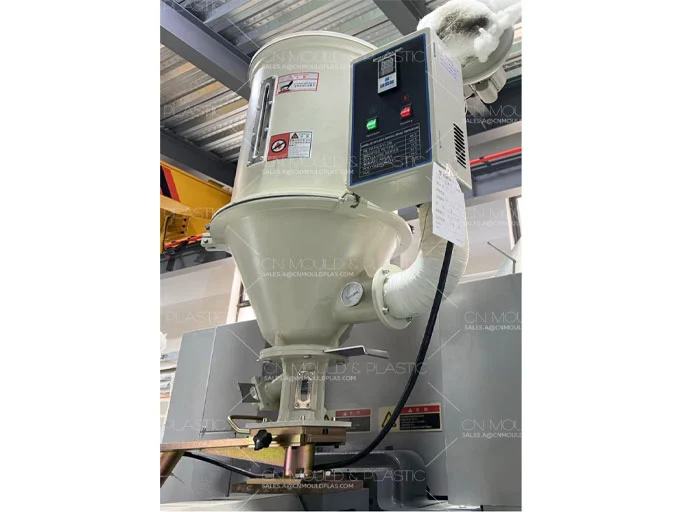
Insufficient drying leaves moisture in the material, which vaporizes during processing and creates bubbles.
Countermeasures
① To reduce air entrapment in the barrel
② To reduce air entrapment in the cavity
③ To prevent material degradation
Lower barrel temperature (check actual melt temperature if necessary)
Shorten residence time by selecting the appropriate screw diameter
Clean the barrel and auxiliary equipment thoroughly to avoid material contamination
④ To eliminate moisture
Dry the material thoroughly according to the recommended process conditions.
⑤ To improve venting
Optimize mold venting, especially at locations where bubbles tend to appear.

 English
  français
  Deutsch
  Español
  italiano
  русский
  português
  العربية
  dansk
dansk  Suomi
Suomi  Svenska
  norsk
norsk