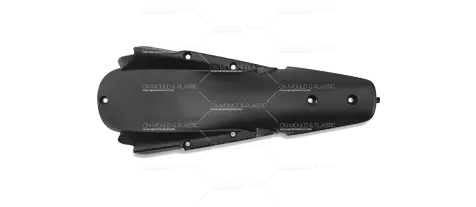
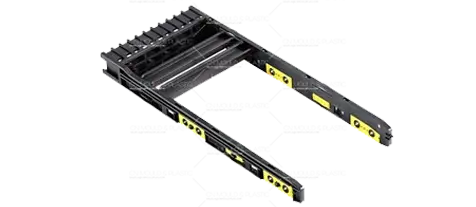
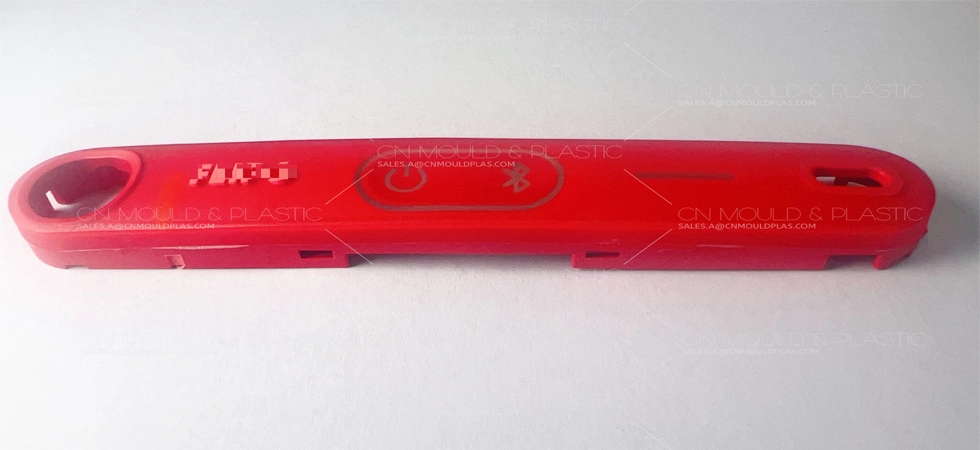
During the injection molding process, internal stress is inevitably introduced into plastic parts due to factors such as uneven plasticization, crystallization, molecular orientation, non-uniform cooling within the mold cavity, and the influence of metal inserts. This residual stress can lead to part deformation or cracking during use. To mitigate these issues and enhance product performance and stability, appropriate post-processing treatments are often applied. The two most common methods are annealing and moisture conditioning.
Annealing Treatment
Annealing is a heat treatment process where plastic parts are placed in a low-temperature heating medium (such as hot water, hot oil, hot air, or liquid paraffin) and held at a specific temperature for a predetermined period. (Note: This differs from the annealing process used for metals.) The purpose is to relieve internal stresses, reduce subsequent warpage, and improve dimensional stability.
The typical annealing temperature is selected between 10–20°C above the part's intended service temperature and 10–20°C below its heat deflection temperature (HDT). The holding time depends on the plastic material and part thickness, generally ranging from 4 to 24 hours.
Moisture Conditioning Treatment
Moisture conditioning is primarily used for hygroscopic plastics prone to oxidation, such as polyamide (nylon). This treatment not only helps eliminate residual stress through heating but also allows the part to reach moisture absorption equilibrium in a controlled environment. This prevents significant dimensional changes during later use due to moisture absorption.
The common media for moisture conditioning are boiling water or potassium acetate solution (with a boiling point of 121°C). The treatment temperature typically ranges from 100°C to 121°C. The required time depends on part thickness. For example, for nylon 6 parts with a thickness between 1.5 mm and 6 mm, the conditioning time may range from 2 to 96 hours.
By understanding and applying these post-molding treatments—annealing for stress relief and moisture conditioning for hygroscopic materials—manufacturers can significantly improve the mechanical properties, dimensional accuracy, and long-term reliability of plastic components.

 English
  français
  Deutsch
  Español
  italiano
  русский
  português
  العربية
  dansk
dansk  Suomi
Suomi  Svenska
  norsk
norsk