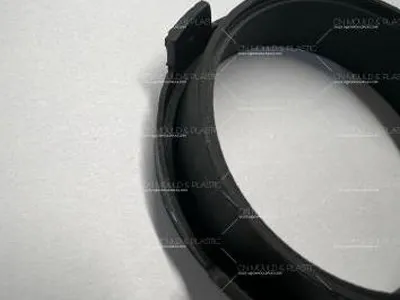
PBT (Polybutylene Terephthalate) has the following performance characteristics:
(1) Appearance and Density
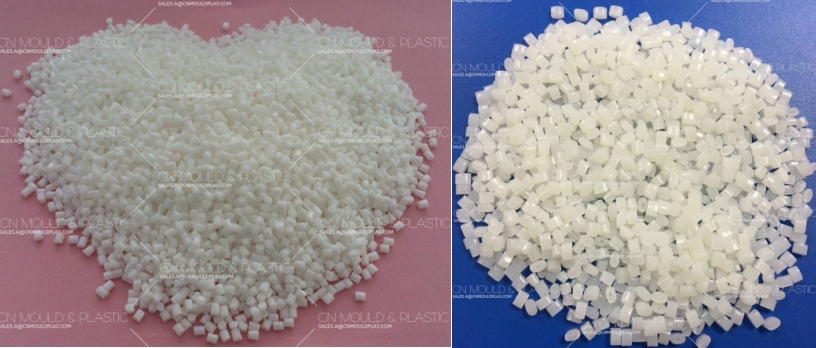
PBT is typically white or light yellow in color and has a glossy surface. Its density ranges from 1.31 to 1.55 g/cm³, and its average molecular weight is between 30,000 and 40,000.
(2) Mechanical Properties
PBT resin itself has relatively low mechanical properties. However, when modified with glass fiber reinforcement, PBT exhibits high tensile strength, bending strength, and a higher heat deflection temperature (for example, PBT with 30% glass fiber reinforcement can achieve a heat deflection temperature of up to 203°C). It also has a low coefficient of friction and good wear resistance. However, it is highly sensitive to notches and has low notch impact strength.
(3) Electrical Insulation
One of the most outstanding properties of PBT is its excellent electrical insulation. Even under conditions of humidity, high temperatures, high frequencies, and harsh environments, PBT retains good electrical insulation properties. This makes it highly valuable for applications in the electronics and electrical industries.
(4) Crystallization and Melting Point
Glass-fiber reinforced PBT has a melting point of around 225°C. The material crystallizes easily and has a relatively fast crystallization rate.
(5) Melt Flow and Processability
PBT has low melt viscosity and good flowability, providing sufficient flow length for molding. This makes it suitable for forming thin-walled, complex shapes, and long flow paths.

 English
  français
  Deutsch
  Español
  italiano
  русский
  português
  العربية
  dansk
dansk  Suomi
Suomi  Svenska
  norsk
norsk