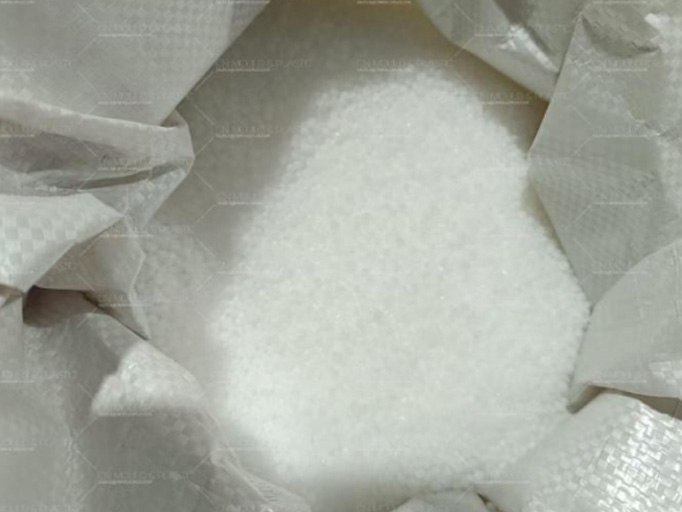
Ever wondered what makes that sturdy yet flexible food container or that durable car part? Chances are, it's Polypropylene, or PP. Let's dive into the fascinating world of this common yet incredible plastic!
1. Chemical & Physical Properties
① Semi-Crystalline Structure: PP is a semi-crystalline thermoplastic. It’s stiffer and has a higher melting point than polyethylene (PE)—making it ideal for applications where rigidity matters.
② Copolymer Magic: Pure PP (homopolymer) becomes brittle below 0°C. To solve this, most commercial PP is a copolymer blended with 1–4% ethylene, either randomly or in blocks. This boosts impact resistance, though it slightly reduces heat deflection temperature (around 100°C), transparency, and gloss.
③ Strength & Softening: PP’s mechanical strength increases with ethylene content. Its Vicat softening temperature is 150°C—great for heat-resistant applications.
④ Surface Toughness: Thanks to its high crystallinity, PP offers excellent surface stiffness and scratch resistance. Perfect for household items and automotive parts!
⑤ No Stress Cracking: PP doesn’t suffer from environmental stress cracking. It’s often modified with glass fibers, metal additives, or thermoplastics for enhanced performance.
⑥ Melt Flow Matters: PP’s melt flow rate (MFR) ranges from 1–40. Lower MFR grades have better impact resistance but lower tensile strength. Copolymers outperform homopolymers in strength at the same MFR.
⑦ Shrinkage & Chemical Resistance: PP has high shrinkage (1.8–2.5%), but it’s more uniform than HDPE. Adding 30% glass filler reduces shrinkage to 0.7%. It resists moisture, acids, and bases—but keep it away from aromatic hydrocarbons (e.g., benzene) and chlorinated solvents!
2. Common Applications
PP’s versatility shines in both everyday and industrial uses:
Automotive: Bumpers, ventilation ducts, fans (often with metal-filled PP for extra strength).
Home Appliances: Dishwasher door liners, dryer vents, washing machine frames and lids, refrigerator door seals.
Whether it’s keeping your car light or your appliances durable, PP is everywhere—quietly making modern life possible!

 English
  français
  Deutsch
  Español
  italiano
  русский
  português
  العربية
  dansk
dansk  Suomi
Suomi  Svenska
  norsk
norsk