PA6 and PA66 are neighbors on the material shelf—one digit apart. But they don't behave like neighbors in the injection molding machine.
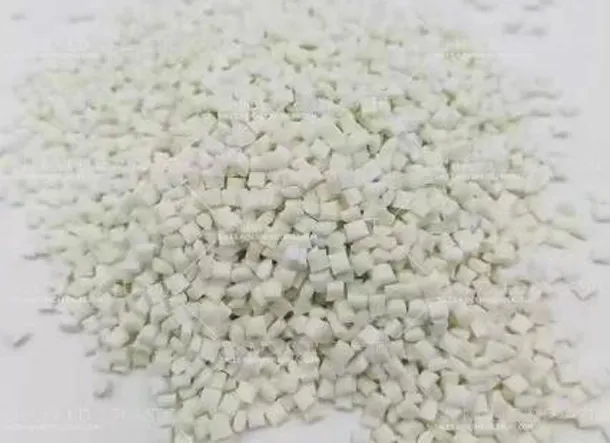
Polyamide (PA)—nylon, to most of us—earns its keep through hydrogen bonding. The polar amide groups along the polymer chain pull neighboring chains together, giving PA its strength, oil resistance, and self-lubricating wear behavior. Against steel, the friction coefficient typically runs 0.1 to 0.3.
But PA6 and PA66, the two workhorses of engineering applications, are not interchangeable. Same family, different backbone. PA6 comes from caprolactam ring-opening polymerization. PA66 is built from hexamethylenediamine and adipic acid. That structural difference changes hydrogen bond density, and hydrogen bond density changes everything—heat resistance, water uptake, stiffness, and how you process the material.

Melting Point: A 40°C Gap That Matters
PA6 melts around 220°C. PA66 melts around 260–265°C.
Glass-filled grades widen the gap further. PA66+30%GF can hit a heat deflection temperature of 250°C. PA6+30%GF lands around 205–220°C.
Under the hood of a car or next to a hot electrical component, that extra thermal headroom is not a luxury. It's the difference between a part that holds its shape and one that sags.
PA6 still holds its own up to about 105°C for continuous use. For ordinary industrial parts and room-temperature structures, it has plenty of margin.
Water Absorption: PA6's Achilles' Heel
Both nylons absorb moisture. PA6 absorbs more.
PA6 water uptake at 23°C over 24 hours runs about 1.8%, with saturation reaching 9–10%. PA66 stays lower.
What does that mean on the factory floor? Dimensional drift. A part that measures perfectly after molding can grow or warp after it equilibrates with ambient humidity. For tight-tolerance parts or applications in humid environments, PA66's better dimensional stability is a real advantage.
Shrinkage tells a similar story. Unfilled PA6 shrinks 1–1.5%. PA66 runs 1.5–2%. Add 30% glass fiber, and both drop to around 0.3%.
Toughness vs Rigidity: Two Different Personalities
PA6 is the tougher of the two. It keeps good impact strength even at low temperatures. Toughened grades can operate from -30°C to -40°C. Think of it as a flexible vine—it bends and springs back.
PA66 is stiffer and harder. It resists creep better under sustained load. Think of it as a hardwood stick—rigid, strong, but with less give.
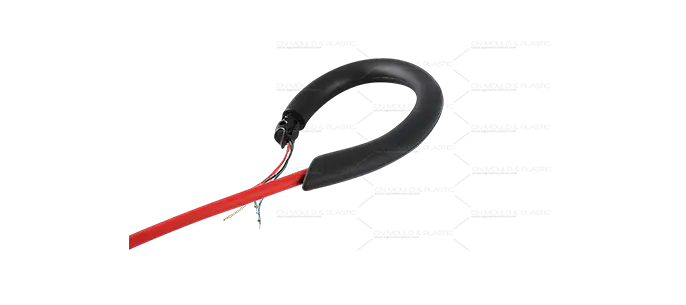
That personality difference drives application choices. Snap fits, cable ties, living hinges, and parts that see repeated flexing often favor PA6. Structural supports, high-stiffness gears, and housings lean toward PA66.
Processing: PA6 Is More Forgiving, PA66 Demands More Care
Drying is non-negotiable. PA6 with moisture above 0.2% should be dried in hot air above 80°C for 3–4 hours. If the material has been exposed for more than 8 hours, vacuum drying at 105°C for 1–2 hours or more is recommended. PA66 in sealed packaging can go straight to the machine. Once opened, dry it at 85°C.
Barrel temperature. PA6 runs from 220°C minimum. PA66 starts at 250°C. PA66 has a narrower processing window—keep melt temperature below 300°C to avoid color shift, embrittlement, or silver streaks.
Mold temperature controls crystallinity. PA6 typically runs 80–90°C. For walls thicker than 3 mm, a low mold temperature of 20–40°C is suggested. Glass-filled grades should run above 80°C. PA66 generally runs around 80°C. Thin-wall parts molded below 40°C may need annealing to stabilize crystallinity and hold dimensions.
Gate and venting. Both materials freeze fast. Gate diameter should not be smaller than 0.5 times the part thickness. For submarine gates, minimum diameter is 0.75 mm. Vent depth should stay under 0.025 mm—nylon flash values start around 0.03 mm.
When to Choose PA6, When to Choose PA66
A useful rule of thumb: if the application does not require continuous heat resistance above 187°C, PA6+GF is usually the more economical and easier-processing choice. When heat resistance is the priority, PA66+GF earns its higher cost.
Choose PA6 for:
Room-temperature or moderate-temperature structural parts
High-toughness, impact-resistant components like clips, covers, and sports equipment parts
Cost-sensitive consumer and industrial goods with modest thermal requirements
Choose PA66 for:
Under-the-hood automotive parts and high-temperature electrical components
High-rigidity, creep-resistant structural supports
Precision parts sensitive to moisture-driven dimensional change
Industrial cable ties, fasteners, and electrical connectors
PA66 wins on strength, rigidity, heat resistance, and dimensional stability. PA6 wins on toughness and cost-effectiveness across a broader range of everyday applications.

Quick Selection Guide
Room temperature, toughness, cost control — PA6.
High temperature, rigidity, dimensional control — PA66.

 English
 français
 Deutsch
 Español
 italiano
 русский
 português
 العربية
 dansk
 Suomi
 Svenska
 norsk